Part 1: Rejection as Data, Not Verdict
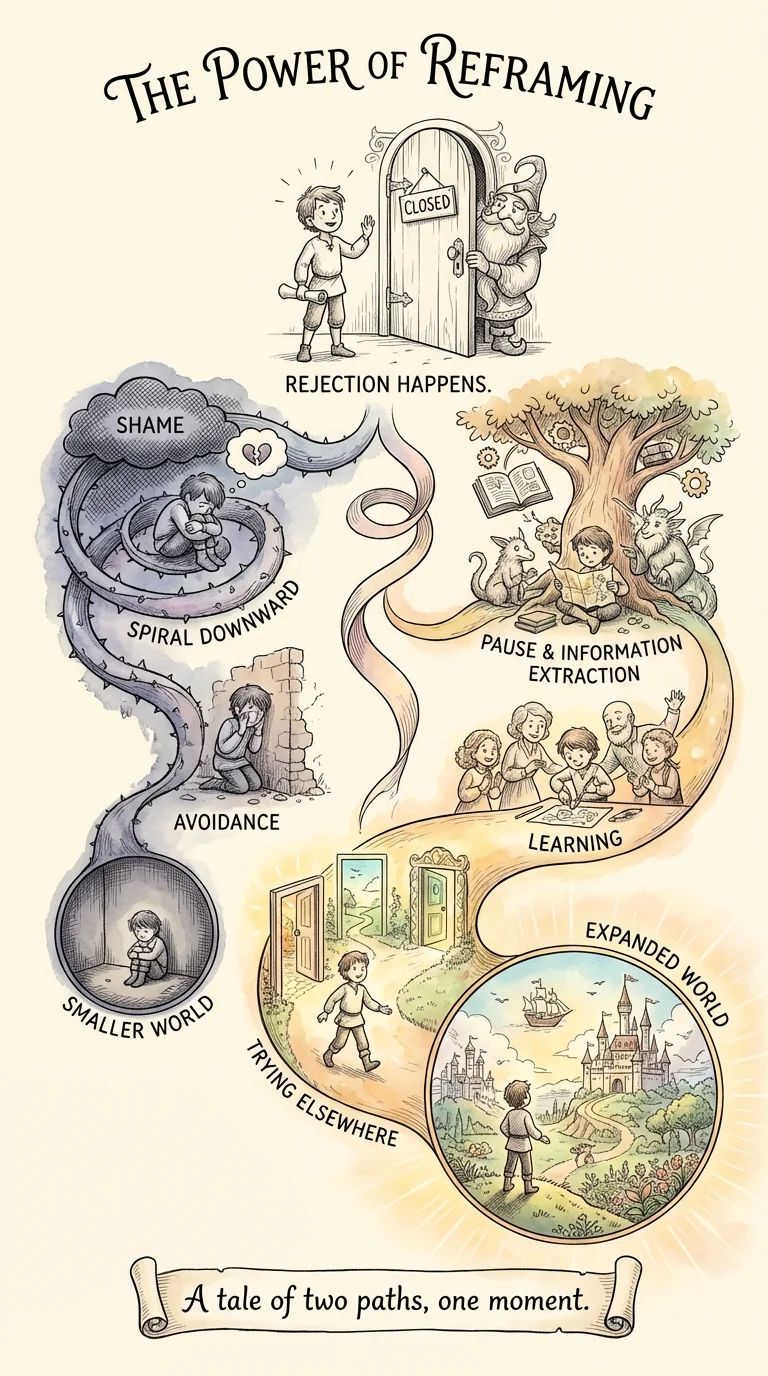
You will experience rejection. In conversations, friendships, professional settings, romantic pursuits—rejection is part of being human and taking social risks. The difference between low and high confidence isn't experiencing LESS rejection. It's how you interpret it. This is the critical mastery shift: Rejection as verdict = shame spiral. Rejection as data = learning opportunity. Same event. Completely different outcome. This day teaches you the reframe that changes everything.
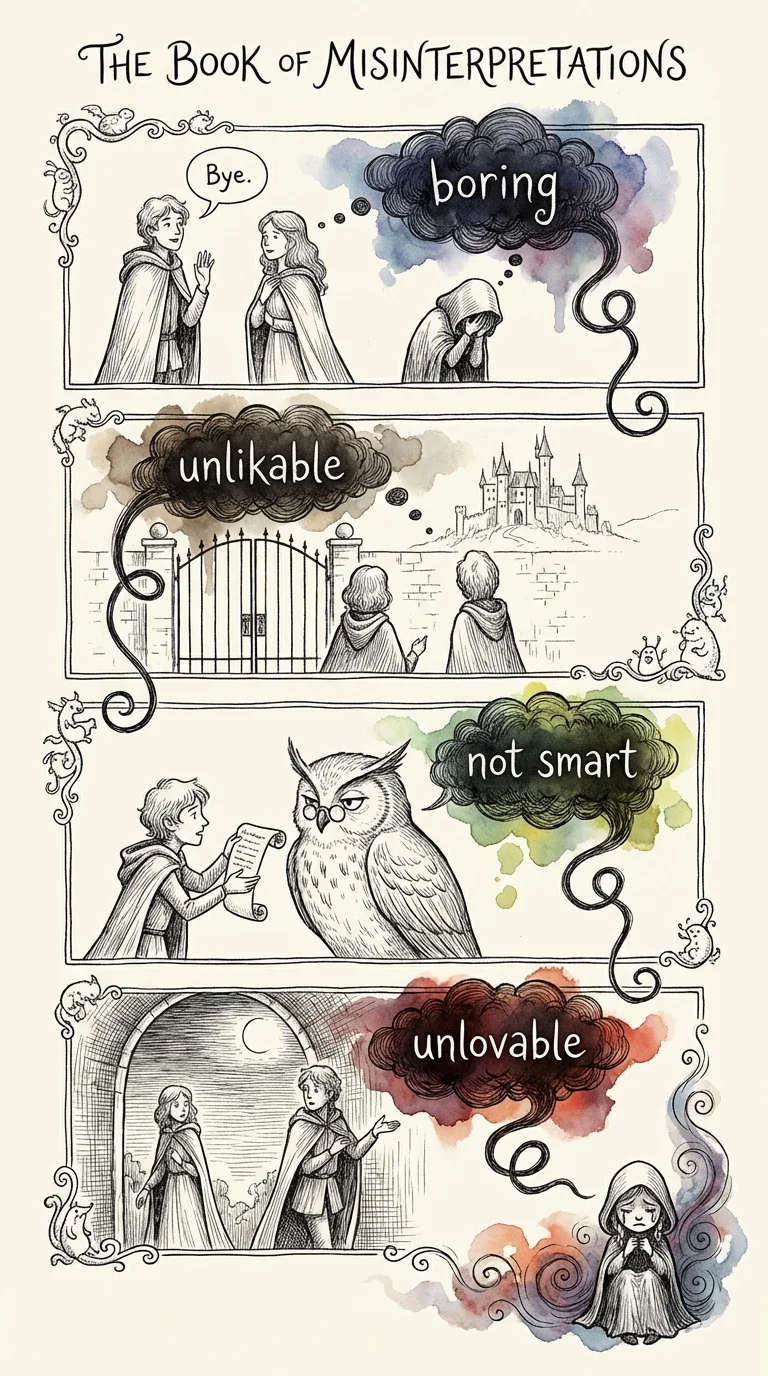
The automatic thought pattern most people use: Rejection occurs → 'I'm not good enough' → Identity-level wound → Avoid future similar situations. Examples: Conversation doesn't continue → 'I'm boring'. Not invited to event → 'Nobody likes me'. Idea shot down → 'I'm not smart enough'. Date doesn't work out → 'I'm unlovable'. The pattern: Rejection = verdict on your worth. But here's the truth: That's a cognitive distortion (remember Day 2?). Rejection is situational feedback, not absolute judgment.
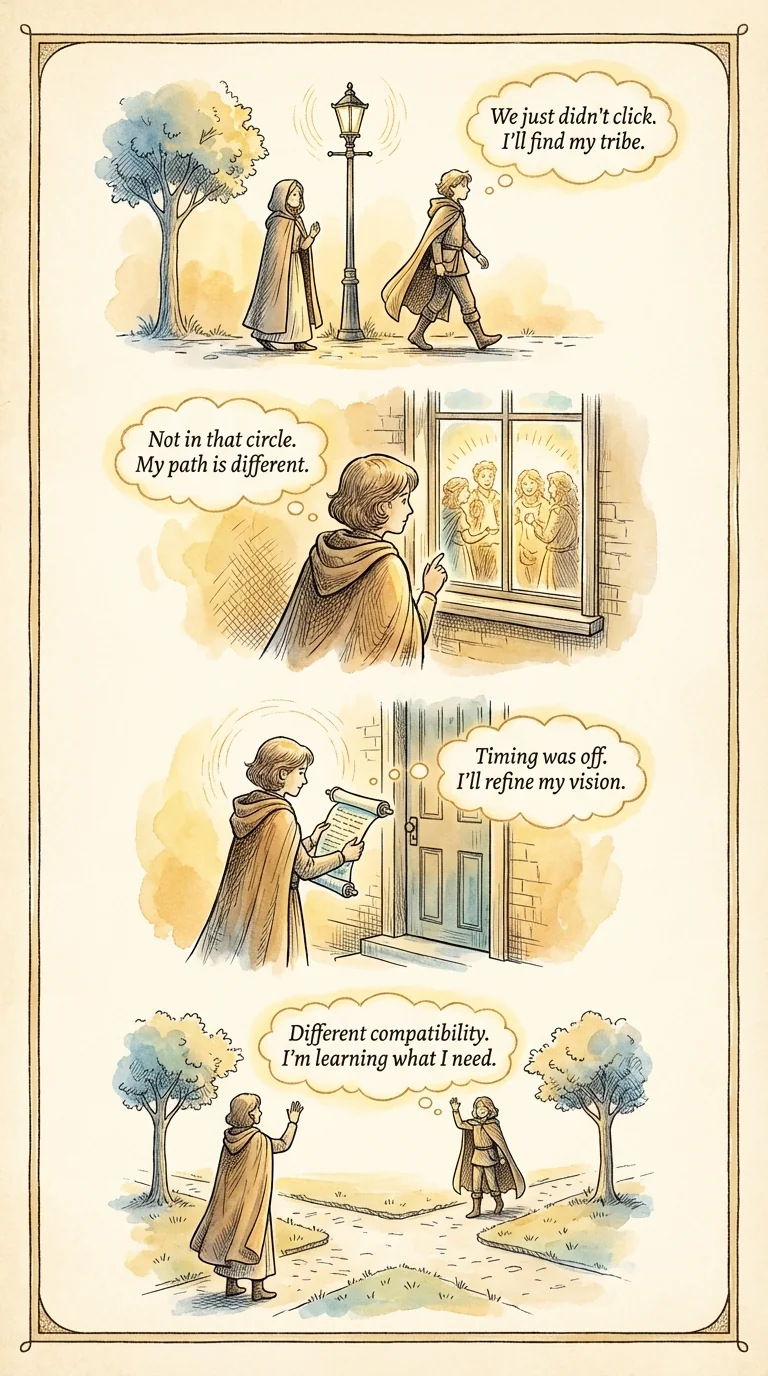
The reframe that changes everything: Alternative interpretation—Rejection occurs → 'That wasn't a match' → Situational assessment → Learn and try elsewhere. Same examples, reframed: Conversation ends → 'We didn't click / bad timing / they were busy / different interests.' Not invited → 'Not in this social circle / oversight / different interests.' Idea shot down → 'Didn't fit current priorities / needed different framing / try different approach.' Date doesn't work out → 'We weren't compatible / different life stages / chemistry is complex.' The pattern: Rejection = information about fit, not verdict on worth. This is mastery thinking.
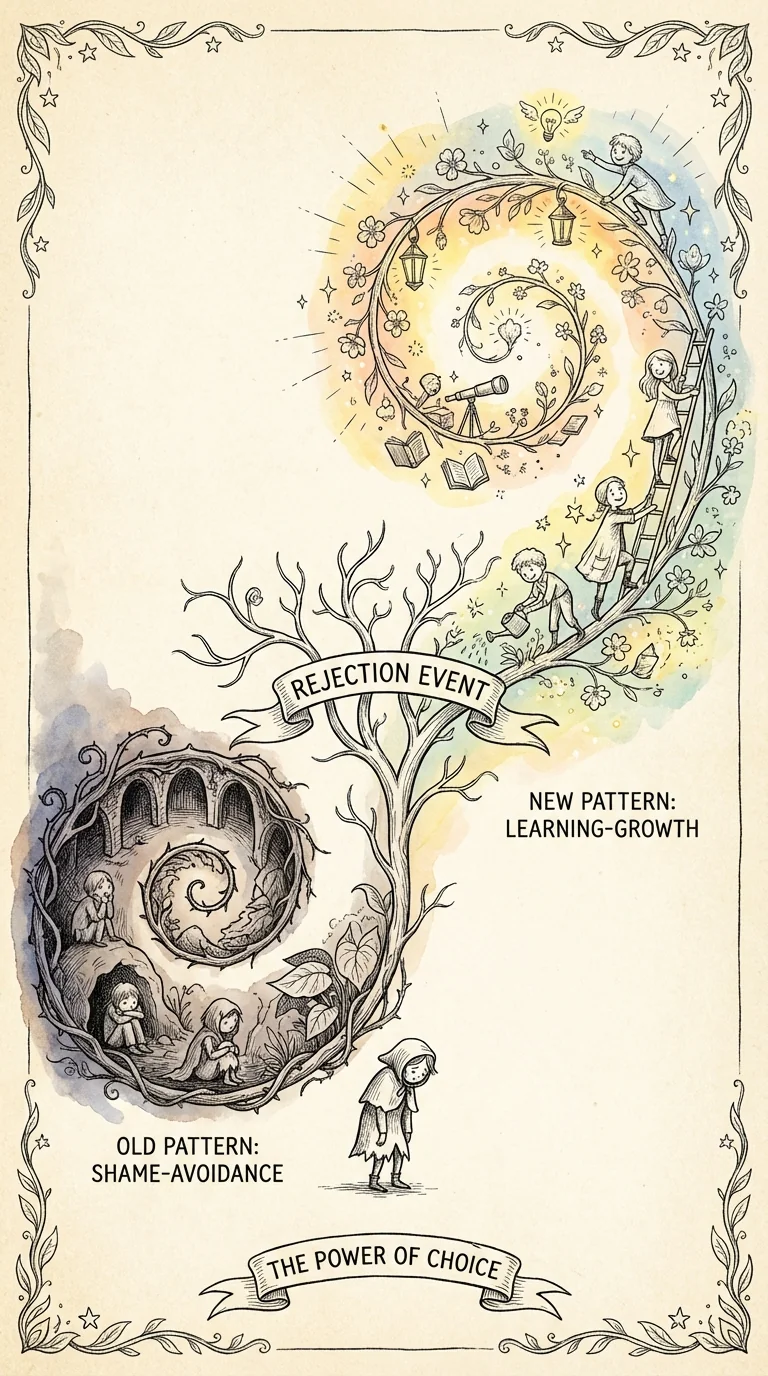
Why this reframe matters: Old pattern (rejection as verdict): Rejection → Shame → Avoidance → Smaller world → Less confidence. New pattern (rejection as data): Rejection → Learning → Adjustment → Try again elsewhere → More experience → Greater confidence. One pattern shrinks your world. The other expands it. One prevents growth. The other accelerates it. Every rejection becomes data for improvement, not proof of unworthiness. Jia Jiang's research: He intentionally sought rejection daily. His discoveries: Most rejections were polite, rejection felt less scary with exposure, fear of rejection was worse than actual rejection.
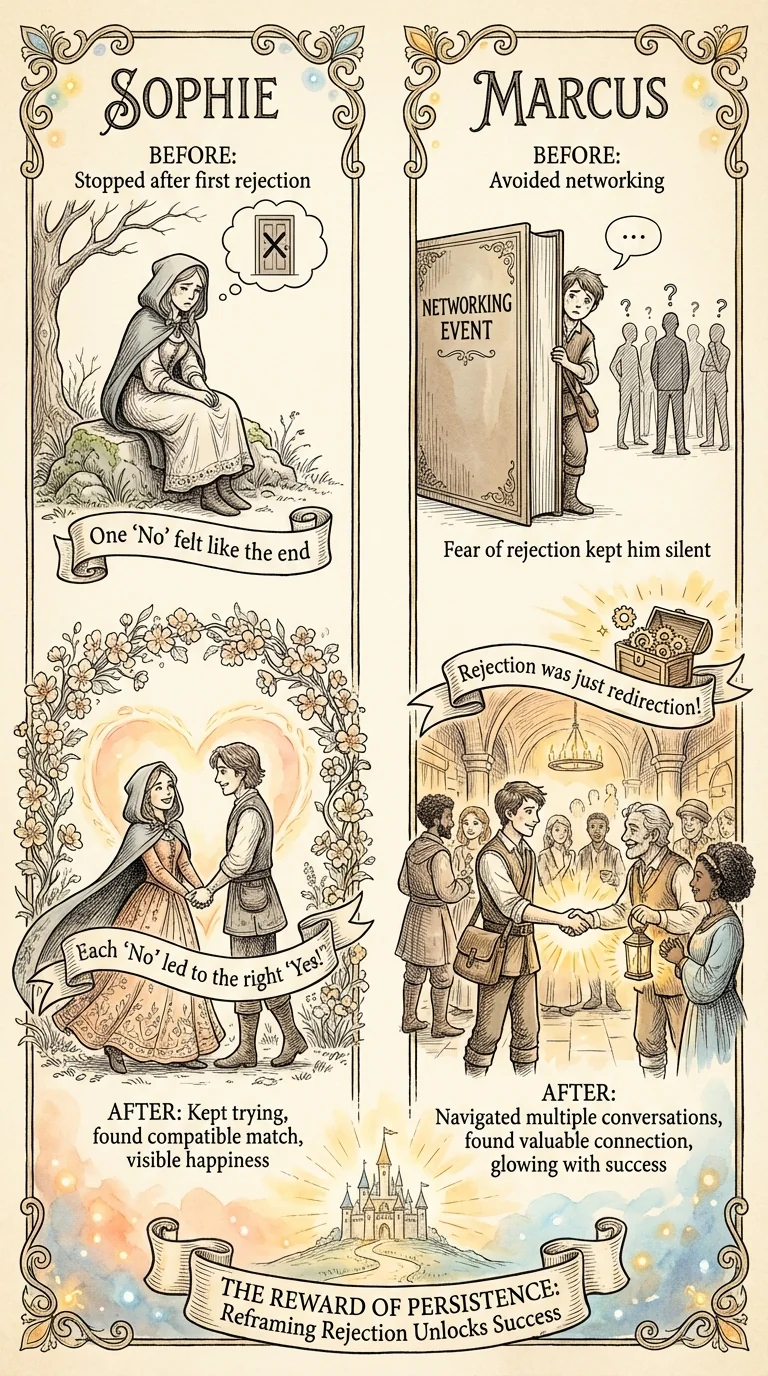
Character story: Sophie's dating app experience. Old pattern: Matched with someone, conversation didn't flow, took it as 'I'm not interesting.' Result: Gave up after few attempts. New pattern: 'That conversation didn't click. Chemistry is complex. Next!' Result: Kept trying, learned what worked in her profile and conversation style, eventually found compatible matches. Key shift: From 'rejection = I'm unworthy' to 'rejection = we weren't a fit.' Marcus's networking evolution: Old pattern—approached someone, brief conversation, interpreted as rejection, stopped trying. New pattern: 'That person wasn't interested in deeper conversation. I'll talk to someone else.' Result: Approached 8 people, 3 conversations went nowhere, 5 were good, 1 turned into valuable professional connection.
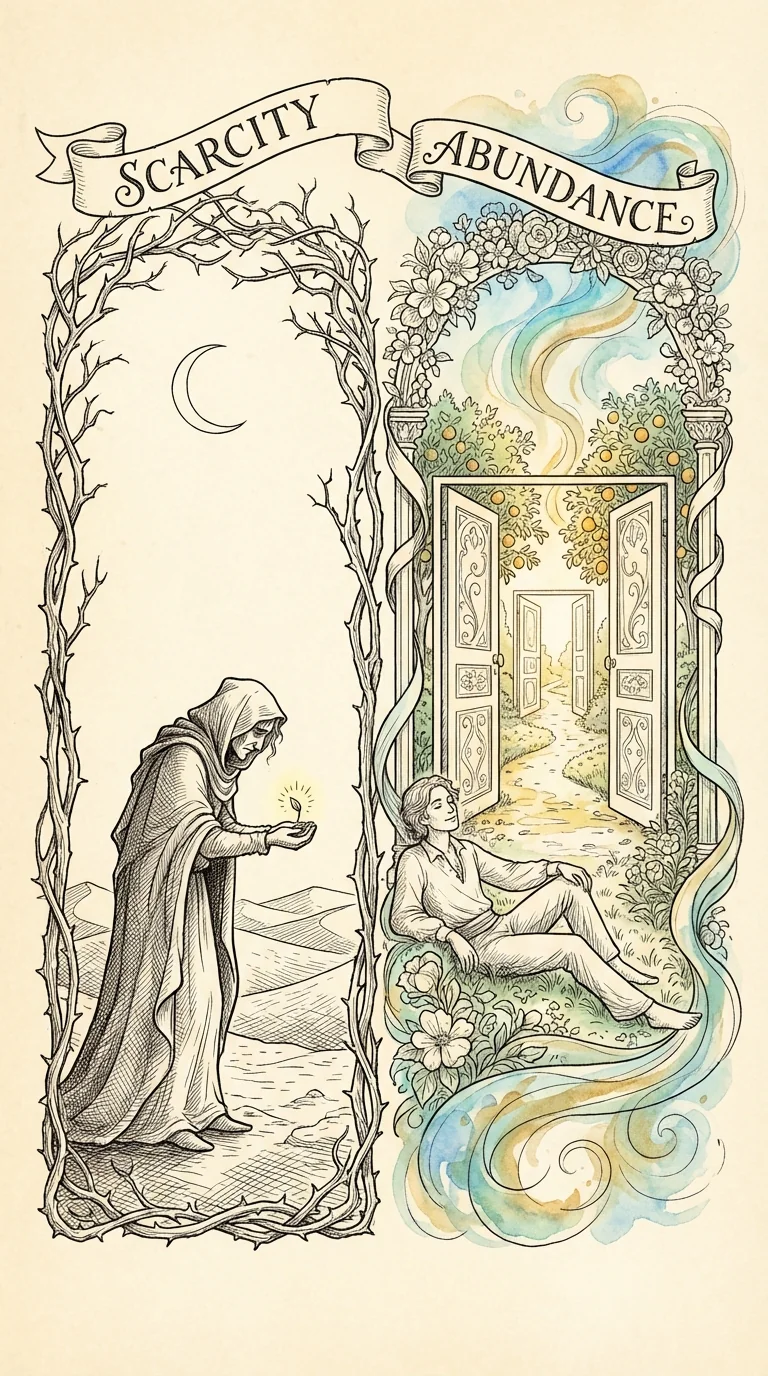
The abundance mindset shifts this entirely: Scarcity thinking—'This is my only chance. If they reject me, I'm doomed.' Result: Desperate energy, takes rejection harder, quits after setbacks. Abundance thinking—'There are many opportunities. If this doesn't work, I'll try elsewhere.' Result: Relaxed energy, handles rejection better, persists through setbacks. The paradox: Abundance mindset (which reduces pressure) often leads to BETTER outcomes. Because you're not clinging. You're not desperate. You're just... moving forward. Part 2 teaches you to practice this reframe in real situations.
Part 2: Building Resilience Through Rejection
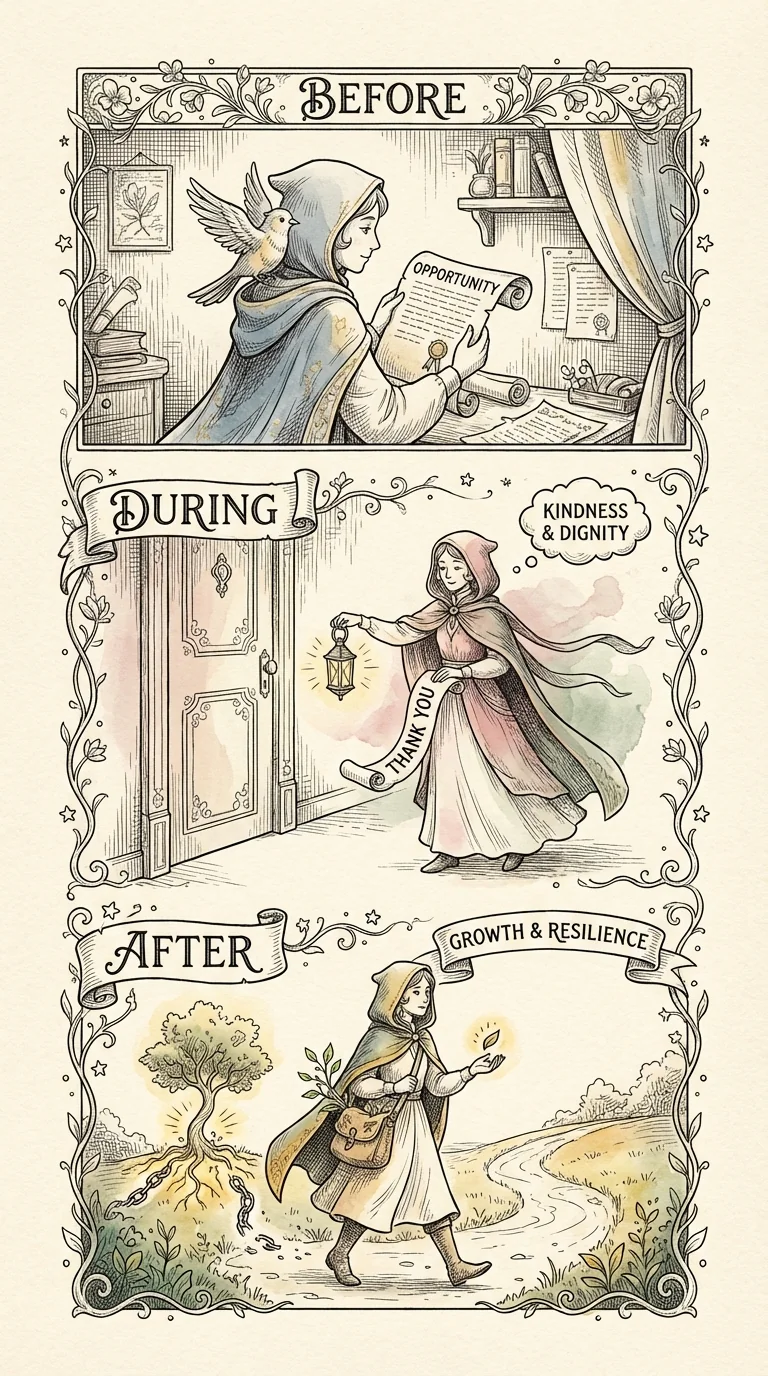
Skills for handling rejection: Before potential rejection, set realistic expectations. Unhelpful: 'This HAS to work or I'm a failure.' Helpful: 'I'm trying something. It might work, might not. Either way I'll learn.' During rejection, respond gracefully: 'Thanks for being honest. I appreciate you considering it.' or 'No problem—thanks for your time!' Key: Brief, gracious, no defensiveness or begging. After rejection, extract the learning: 'What can I learn? Was there something I could do differently? Is there genuinely nothing to learn (just bad fit/timing)? Where else can I try?'
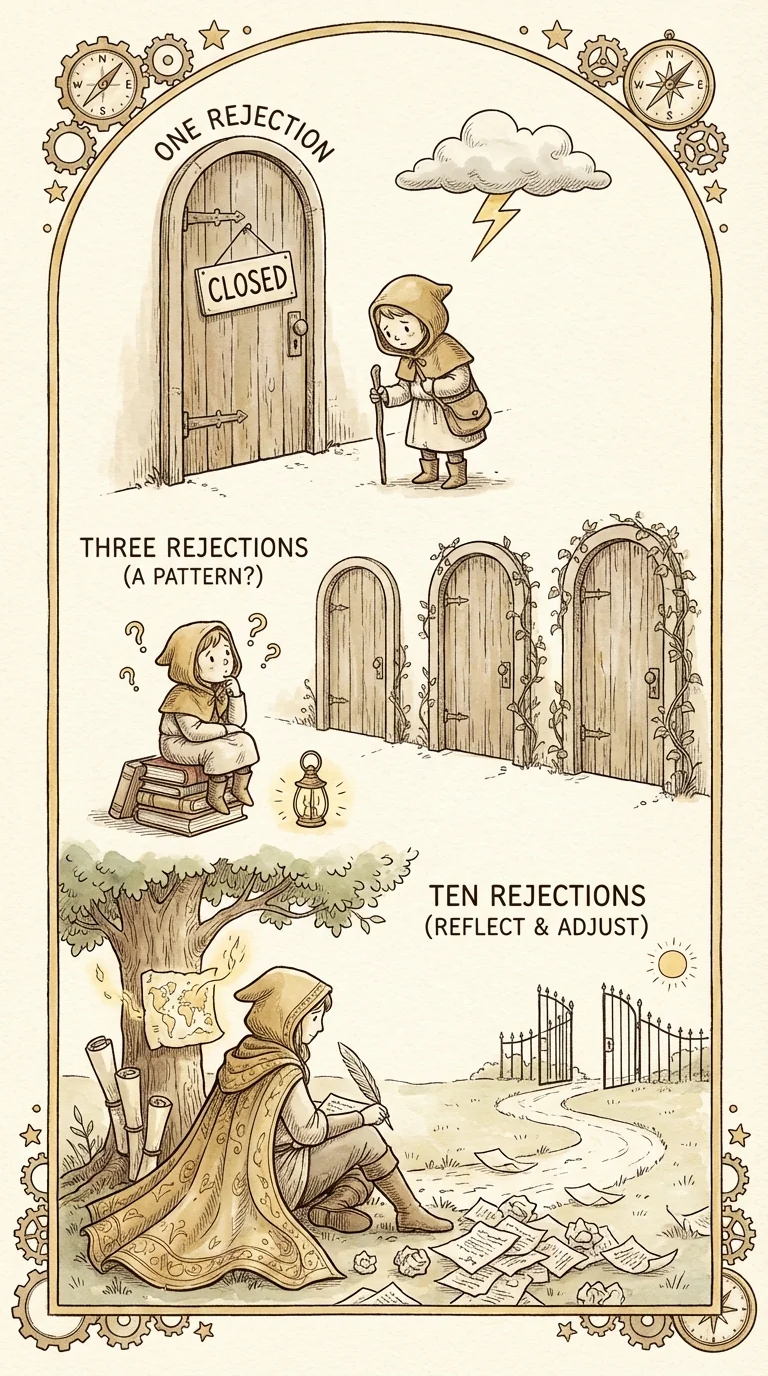
Long-term perspective: One rejection ≠ pattern. Multiple similar rejections = maybe adjust approach. Example: If 10 people decline your conversation attempts at an event, maybe: Wrong event for your style, your approach needs adjustment, bad timing. NOT: 'I'm fundamentally unlikeable.' Context matters massively. This is where the abundance mindset keeps you sane. You're sampling the world, learning, adjusting. You're not making identity conclusions from limited data.
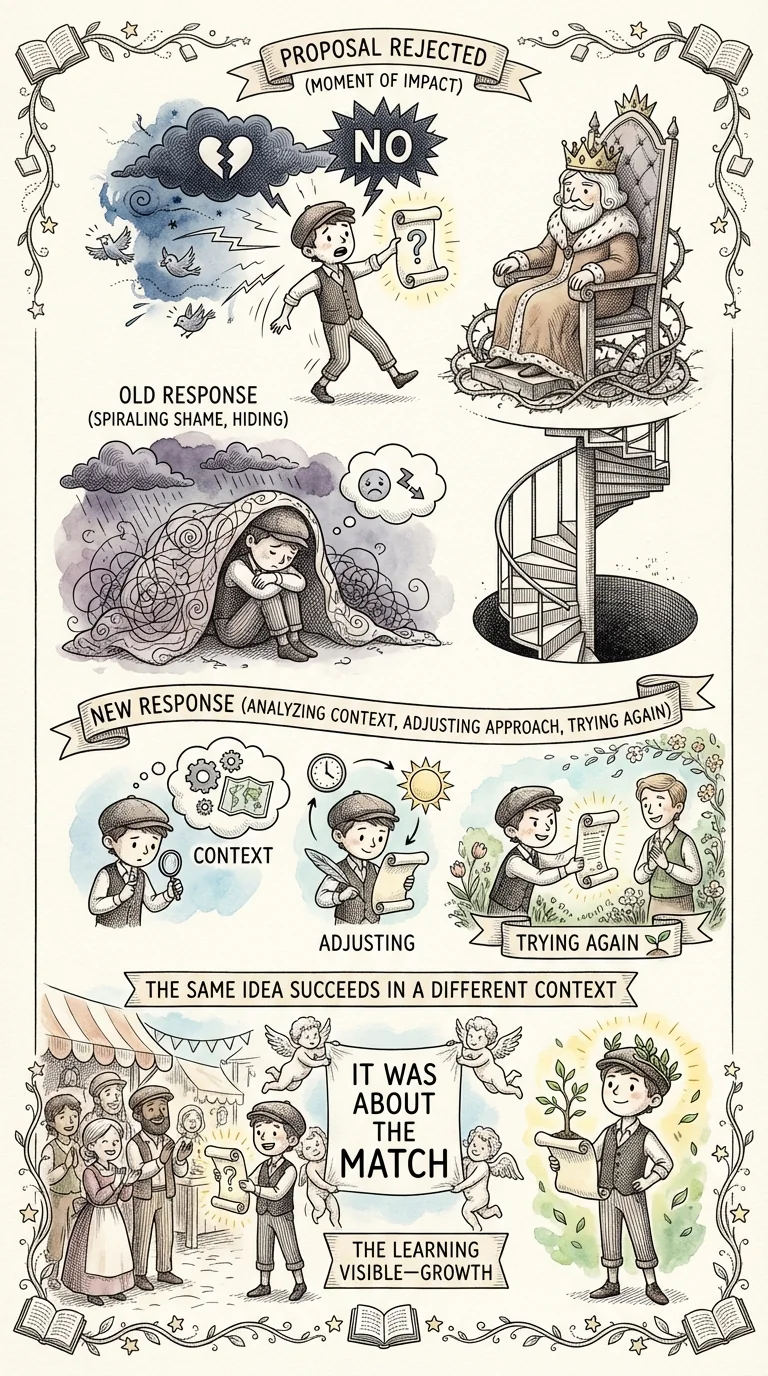
Character story: James's professional resilience. James presented an idea in a meeting. It got shot down. Old pattern: Interpreted as 'I'm not smart enough,' stopped contributing in meetings for weeks. New pattern: 'That approach didn't land with this group. What could I try differently? Who else might value this idea?' He adjusted his framing, proposed it differently in another context, it moved forward. Key insight: One 'no' in one context doesn't mean the idea is bad—it means the timing or framing or audience wasn't right. This is the sophisticated thinking that comes from treating rejection as data.
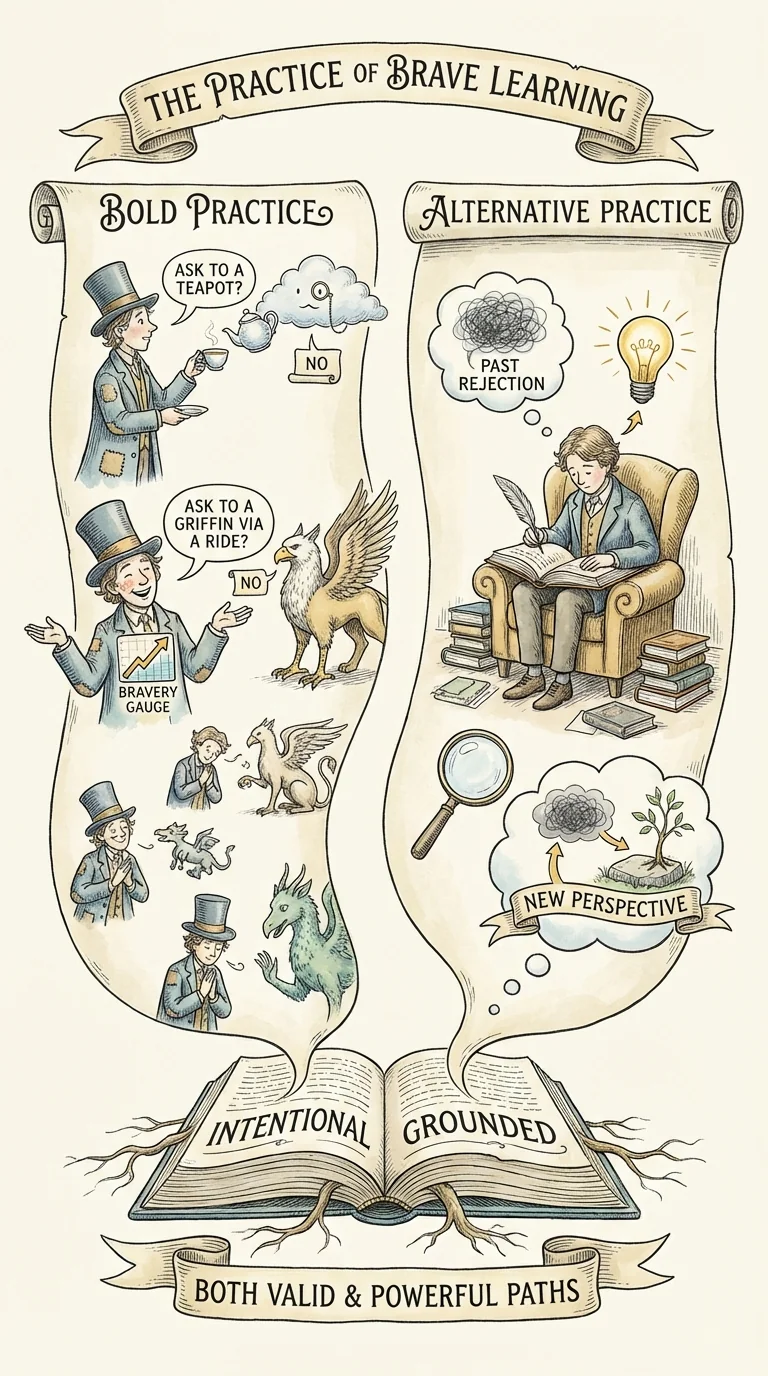
Your practice for today: BOLD OPTION—Seek intentional rejection to desensitize yourself. Make a request you expect will be rejected (but would be nice if granted): Ask for small discount somewhere, request unusual favor, invite someone to something knowing they might decline, make creative/unconventional request. Goal: Desensitize yourself to rejection. Realize it's not catastrophic. ALTERNATIVE OPTION—Reframe past rejection. Think of a recent rejection (social, professional, romantic). Write the 'verdict' interpretation and the 'data' interpretation. Which feels more accurate and useful?
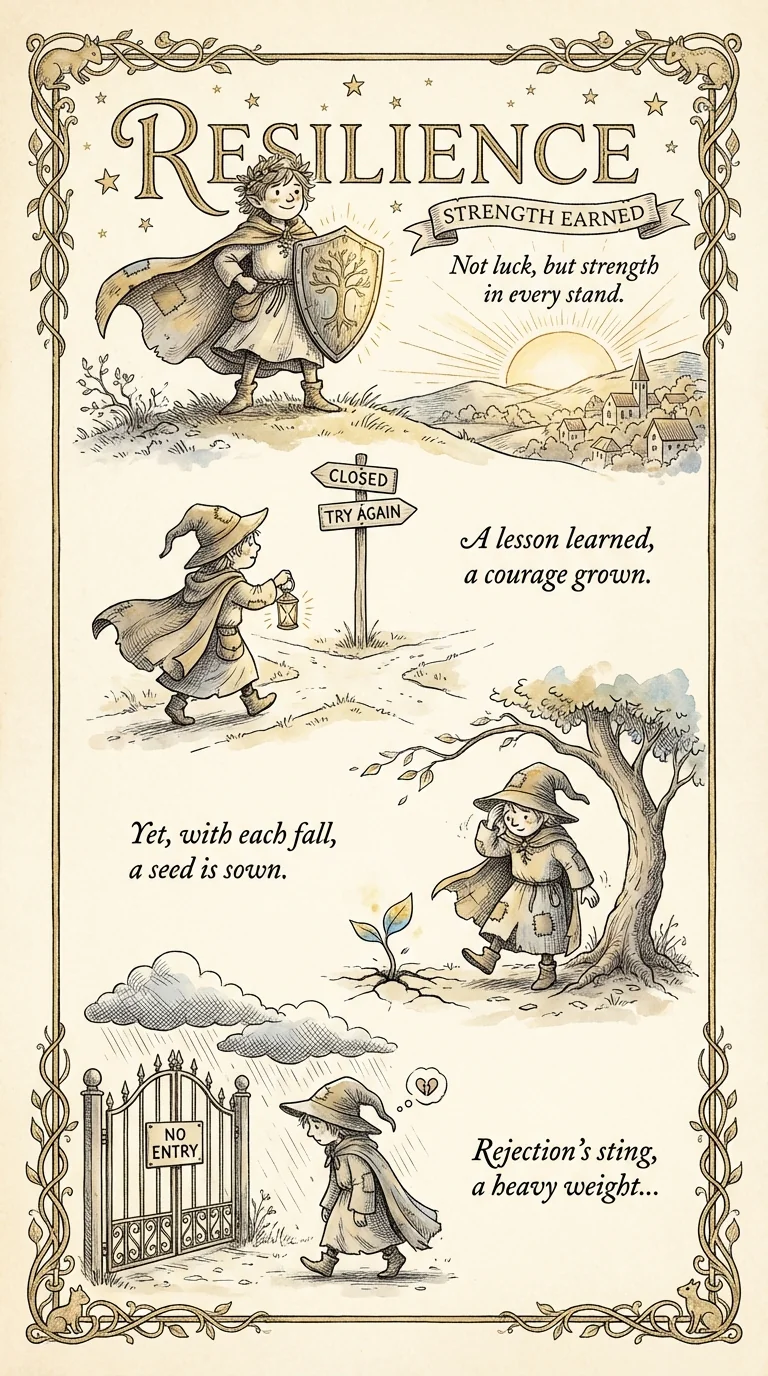
Notice what's happening: You're not learning to avoid rejection (impossible). You're learning to interpret rejection differently. You're building resilience not by never failing, but by failing and bouncing back. This is the sophisticated confidence that comes from mastery. Not 'I never get rejected.' But 'I get rejected and I'm still okay. I learn from it. I keep going.' This is unshakeable because it's not based on perfection—it's based on resilience.
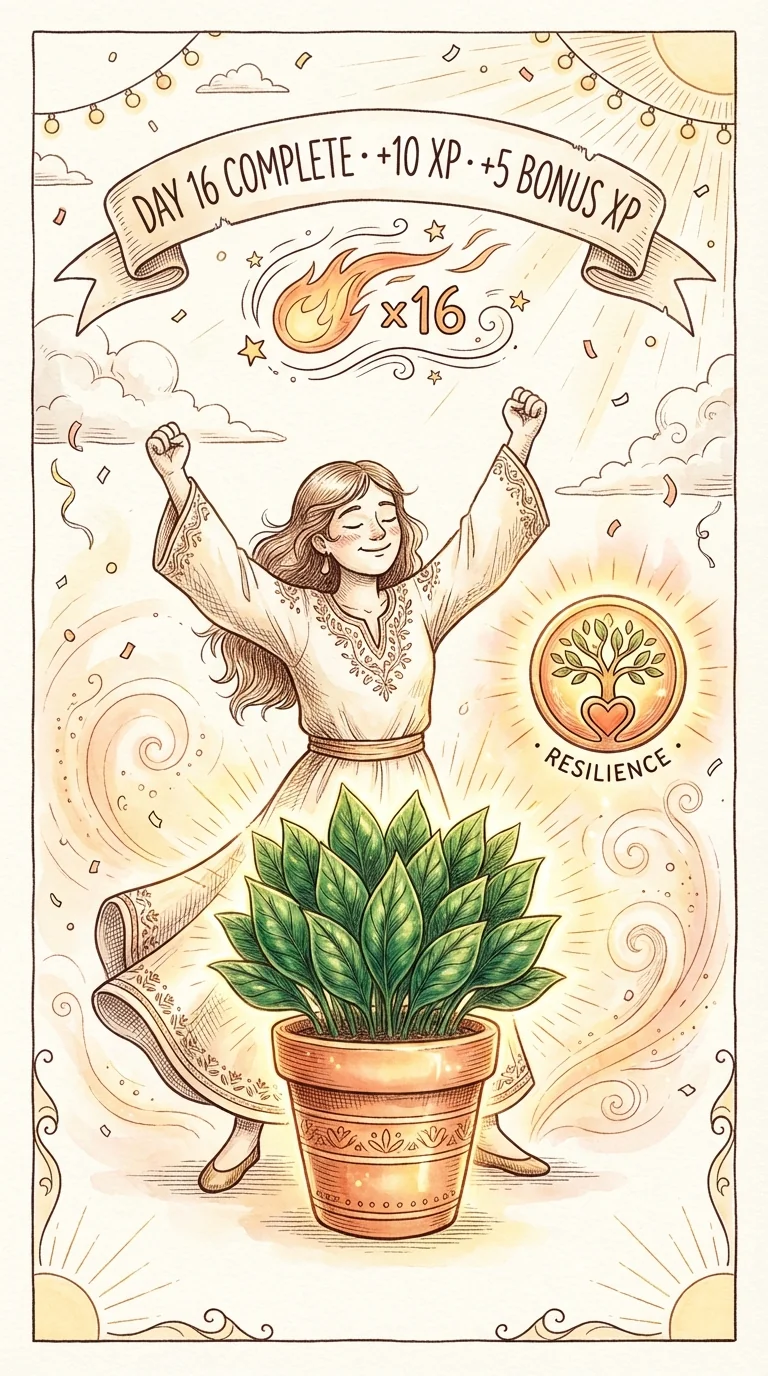
DAY 16 COMPLETE · +10 XP. Your terracotta plant now has 16 glowing leaves—the plant becoming increasingly lush and alive. The banner reads: 'DAY 16 COMPLETE · +10 XP · +5 BONUS XP.' Below: 'Resilience mastered · Rejection reframed · Streak: 🔥 x16 · TOMORROW: The Art of the Genuine Apology →' Five days left. You're building a resilience that will serve you for decades. Keep practicing the reframe. Keep treating rejection as data. Keep going.