Part 1: The Courage to Be Vulnerable

Welcome to Level 3. You've built the foundation. You've developed the skills. Now comes mastery: the integration of everything in complex, authentic ways. Today's focus: Vulnerability. Not the social media kind. Not oversharing with strangers. Real vulnerability—the courage to show up as your actual imperfect self instead of performing perfection. This is where sustainable confidence is actually built.
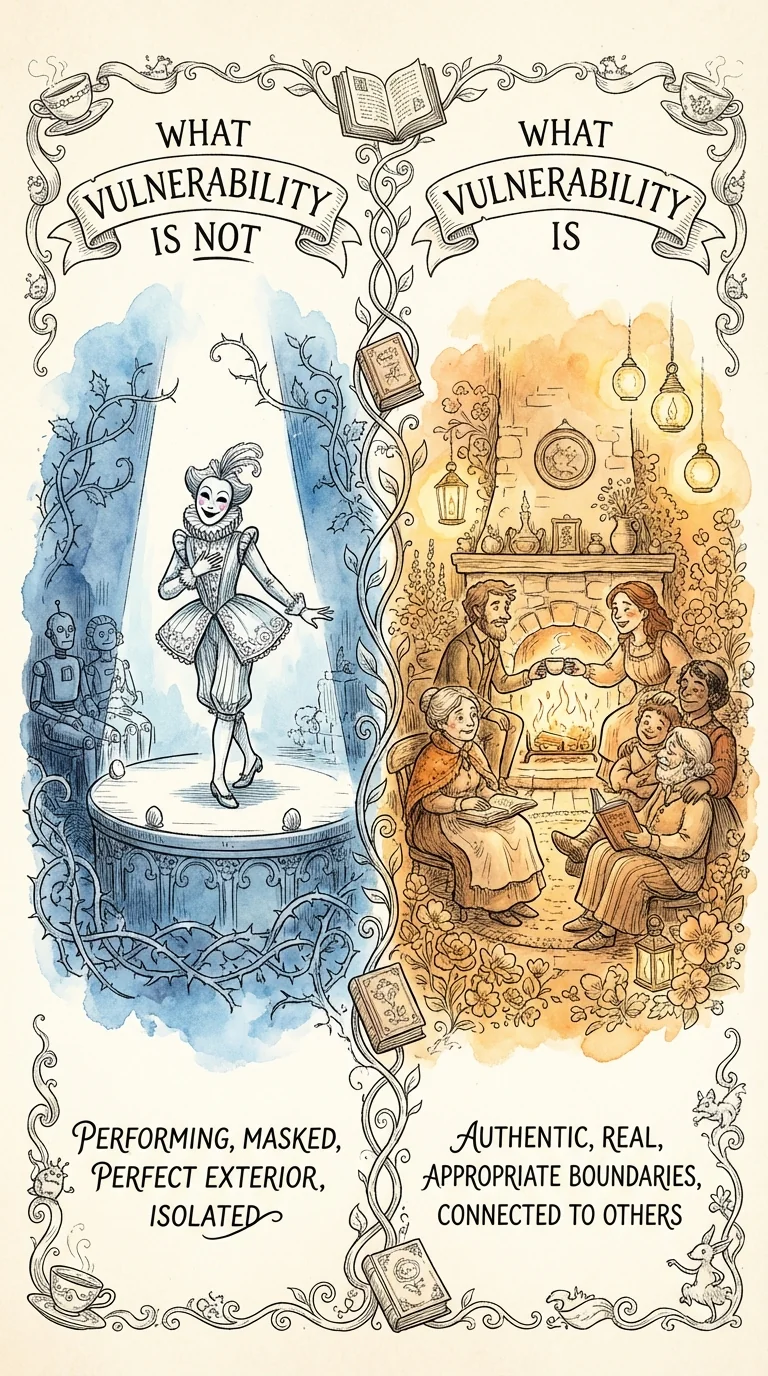
Here's what vulnerability actually is—and what it isn't. It's NOT oversharing personal details with strangers. It's NOT emotional dumping. It's NOT weakness. Real vulnerability is: appropriate self-disclosure that creates connection, showing up authentically instead of performing perfection, being willing to be uncertain and real. It's Brené Brown's definition: uncertainty, risk, emotional exposure. And here's the paradox—vulnerability actually builds genuine confidence because it requires security.

The confidence paradox revealed: Pretending to be perfect = insecure (need to hide real self). Being appropriately real = confident (secure enough to be imperfect). This doesn't mean dumping your wounds on everyone. It means matching your authenticity to relationship depth. Surface relationships get surface-level vulnerability. Deep relationships get deeper vulnerability. The key principle: match vulnerability to context. This is the skill that separates mature confidence from fragile ego.
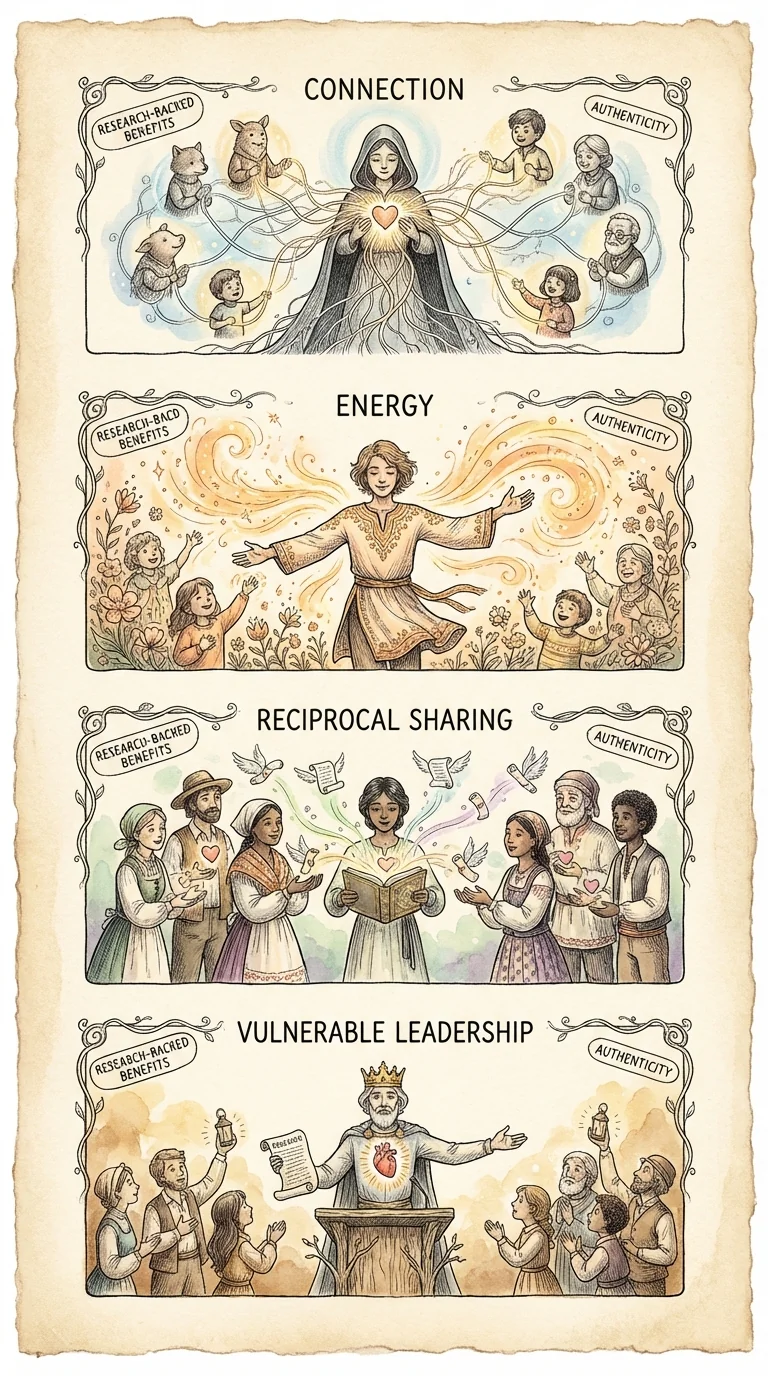
Why vulnerability builds real confidence—the research: Connection through shared humanity beats connection through mutual perfection (which doesn't exist). Authentic living is energizing; performing is exhausting. Vulnerability invites reciprocal sharing—people open up to people who are real. And here's the killer insight: Research shows vulnerable leaders are seen as MORE confident, not less. Showing imperfection with competence = magnetic.

Real stories of vulnerability in action: Jake's networking shift—used to perform impressive image. Result: Surface connections, felt fake, exhausting. New approach: Added appropriate vulnerability. 'My business is growing. Some things work well, some I'm still figuring out.' Result: Deeper conversations, real relationships formed, more collaboration. His insight: 'Perfection is boring and unapproachable. Vulnerability with competence is magnetic.' This is the mastery principle you're about to practice.
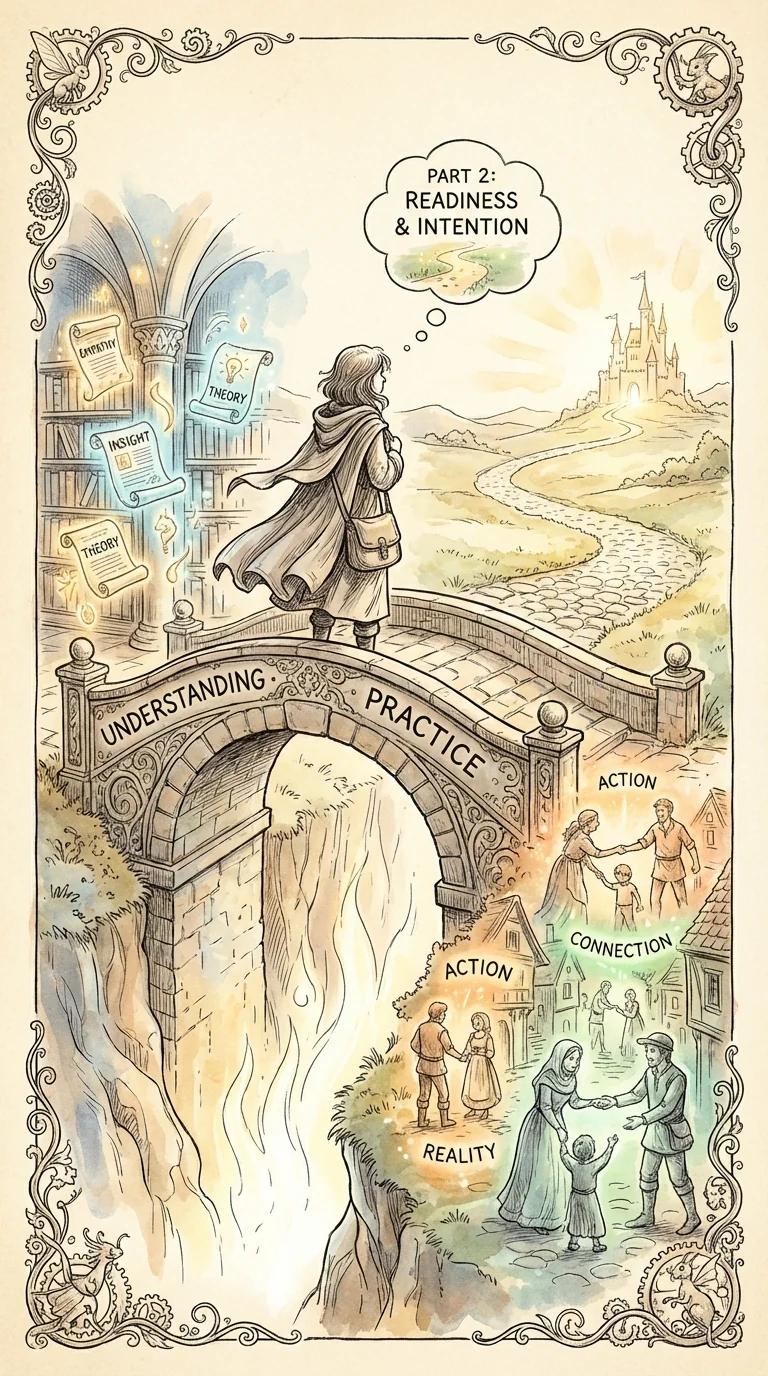
Today's bridge to Part 2: You now understand the psychology of vulnerability. You see how it builds real confidence. You've seen it work in real stories. Part 2 is where you practice: How to share vulnerability appropriately in conversations. The signals of when to go deeper. How vulnerable sharing actually strengthens relationships. And how to maintain healthy boundaries while being real. The theory becomes practice. Mastery begins.
Part 2: The Practice of Authentic Sharing

The levels of vulnerability in real conversations: Surface level (good for: most situations, new acquaintances)—small talk, facts, logistics, safe topics. Example: 'How was your weekend? Good! Went hiking.' Moderate vulnerability (good for: friends, colleagues, social events)—opinions, mild personal stories, challenges you're working through. Example: 'I've been working on public speaking. It's challenging but I'm making progress.' Deep vulnerability (good for: close friends, family, therapy)—fears, insecurities, significant struggles. Today, you'll practice the first two levels.
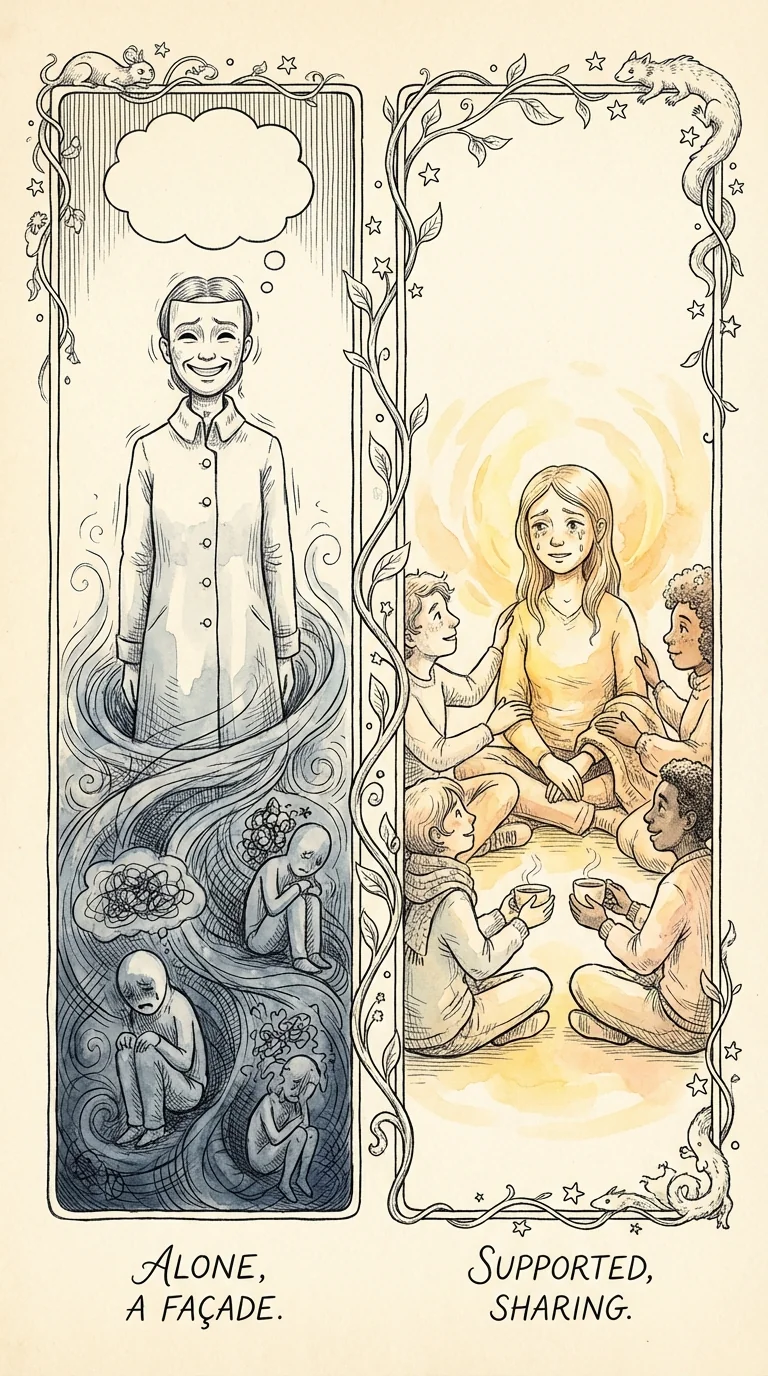
Real story: Two coworkers, same stress. Person A performs: 'Everything's fine! Totally under control!' (while falling apart inside). Result: Isolated, stressed, no support offered. Person B appropriately vulnerable: 'Honestly? I'm overwhelmed with this project. Figuring it out, but it's challenging.' Result: Three coworkers offered help, shared their own struggles, felt less alone. Who showed more confidence? Person B. They were secure enough to admit imperfection. This is what mastery looks like.
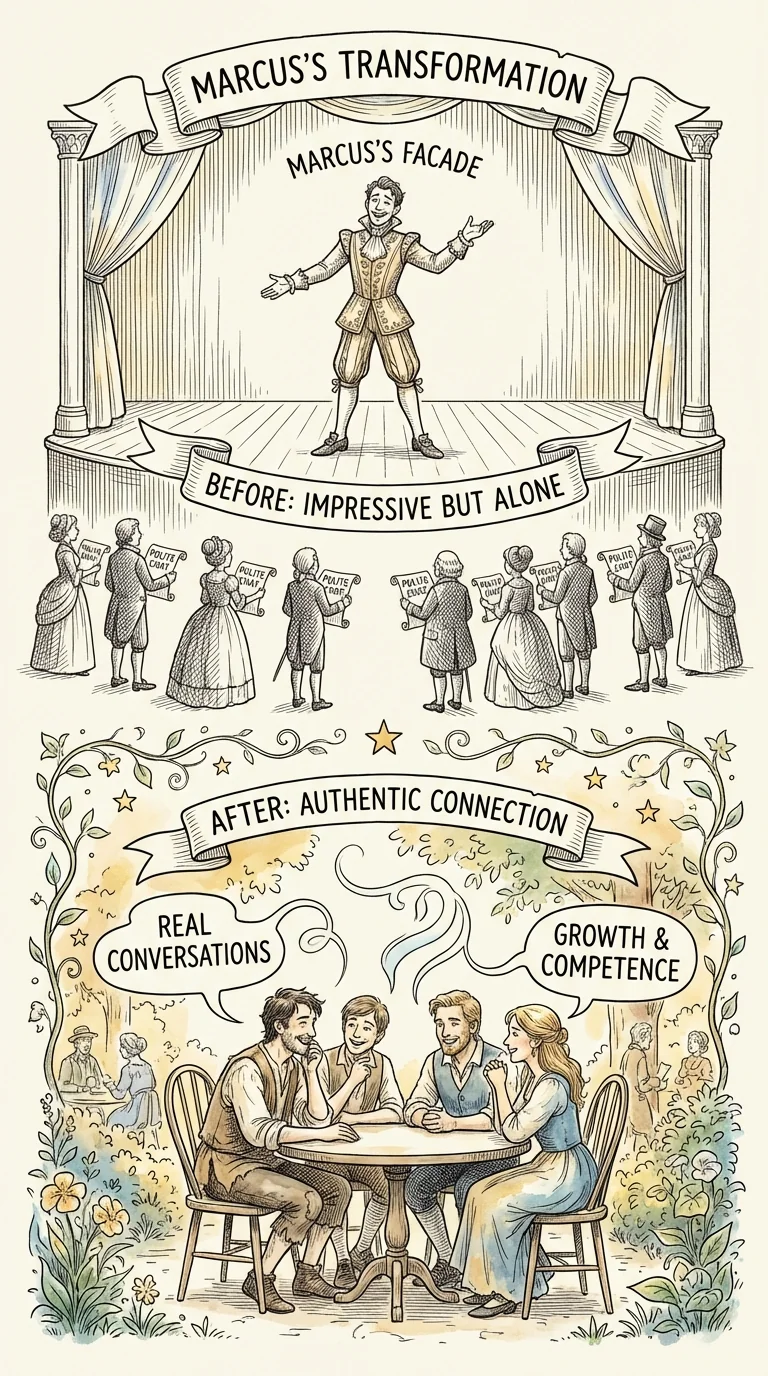
Character story: Marcus at a networking event. Old approach: Try to seem impressive, highlight achievements only, curate perfect image. Result: Lots of surface connections, no real relationships. New approach: Added authentic vulnerability. Instead of 'My business is crushing it!' he says: 'I'm building my business. Some things work well, some I'm still figuring out.' Result: Deeper conversations, people shared their own struggles, real professional relationships formed. His insight: 'Perfection is unapproachable. Vulnerability with competence is magnetic.'

The vulnerability equation (critical principle): Vulnerability WITHOUT competence = oversharing/neediness. Competence WITHOUT vulnerability = cold/unapproachable. Vulnerability + Competence = Authentic confidence. The sweet spot. Example: 'I'm leading this project (competence) and I'll be honest—it's pushing me outside my comfort zone (vulnerability). I'm excited about the challenge (growth mindset).' This is the mastery you're building.
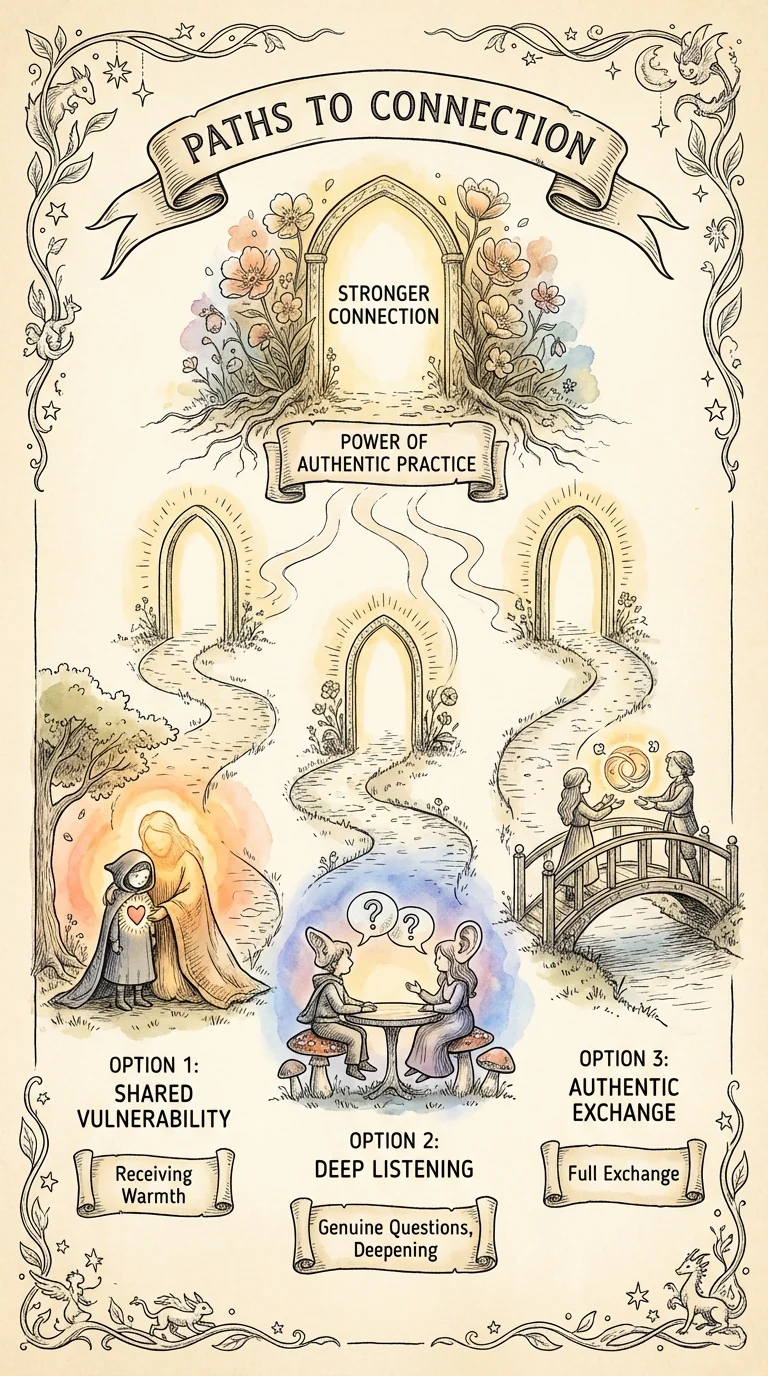
Your practice today: Option 1—Share something slightly vulnerable with someone you trust (appropriate to relationship level). Lower stakes: 'I've been working on [skill]. It's challenging but I'm making progress.' Medium stakes: 'I've been feeling [emotion] about [situation].' Option 2—Active listening with follow-up: Listen to someone's challenge, ask genuine follow-up questions, show you care. Option 3—Both. The goal: Experience authentic sharing creating connection. Feel the strength of realness. Notice: Does vulnerability weaken the relationship or strengthen it?

DAY 15 COMPLETE · +10 XP. Your terracotta plant now has 15 glowing leaves—one full week into Level 3, one for each day of building your authentic confidence. The banner reads: 'DAY 15 COMPLETE · +10 XP.' Below: 'Mastery section unlocked · Vulnerability mastered · Streak: 🔥 x15 · TOMORROW: Rejection as Data, Not Verdict →' The final week begins. You're building something real that will last beyond these 21 days. Keep going.