Part 1: Stop Comparing, Start Connecting
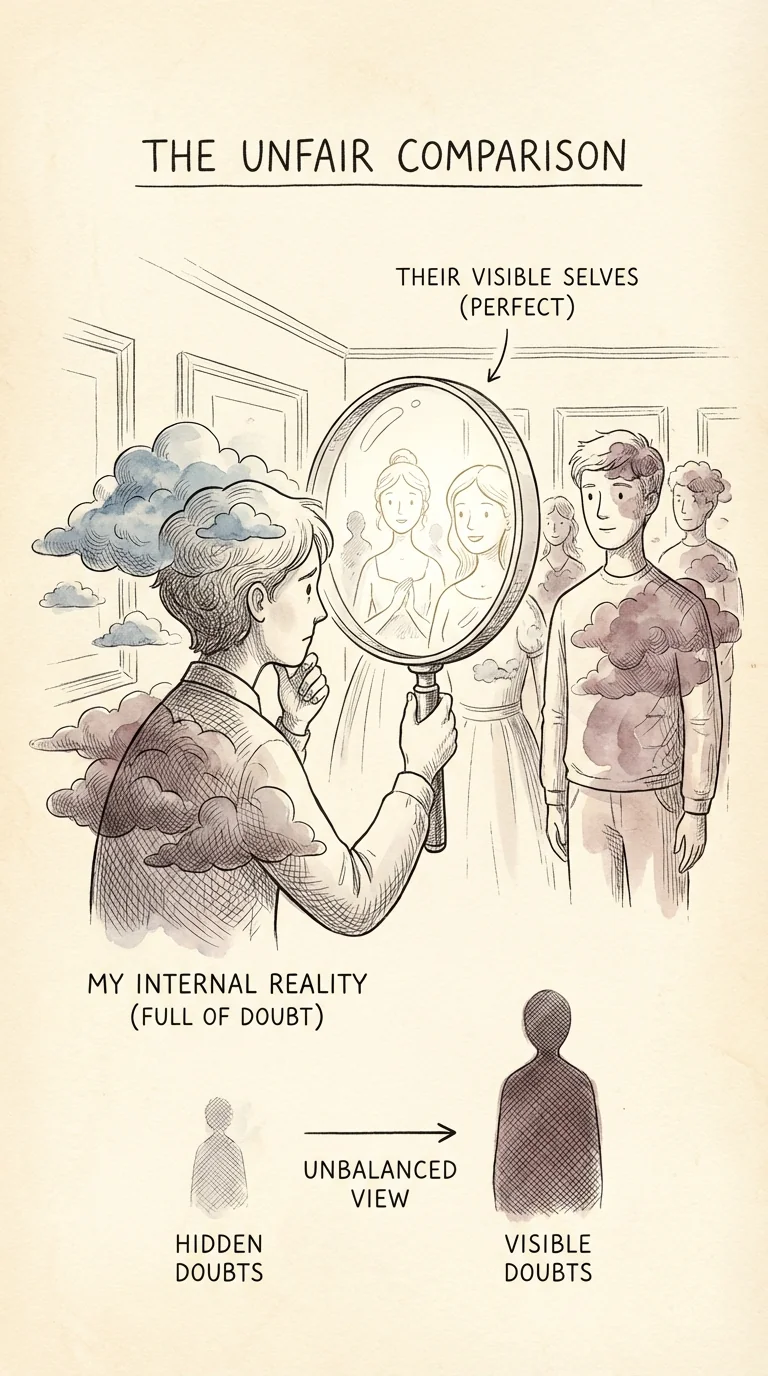
You walk into a room and immediately start measuring. 'They're so much more confident than me.' 'She's naturally charming—I'll never be like that.' 'He makes friends easily. Something's wrong with me.' This is social comparison. And it's silent confidence-killer. You're comparing your internal experience (all your doubts, fears, awkwardness) to their external presentation (their confident facade). It's fundamentally unfair. You're comparing your behind-the-scenes to their highlight reel.

Here's the hidden truth: Everyone is insecure about something. That person who seems effortlessly confident? They have doubts they manage quietly. That naturally charming person? They practiced, failed, and learned—you just didn't see it. What you see: polished exterior. What exists: years of practice, current anxiety they're managing, their own insecurities. You're looking at the finished product and thinking it's effortless. It's not.
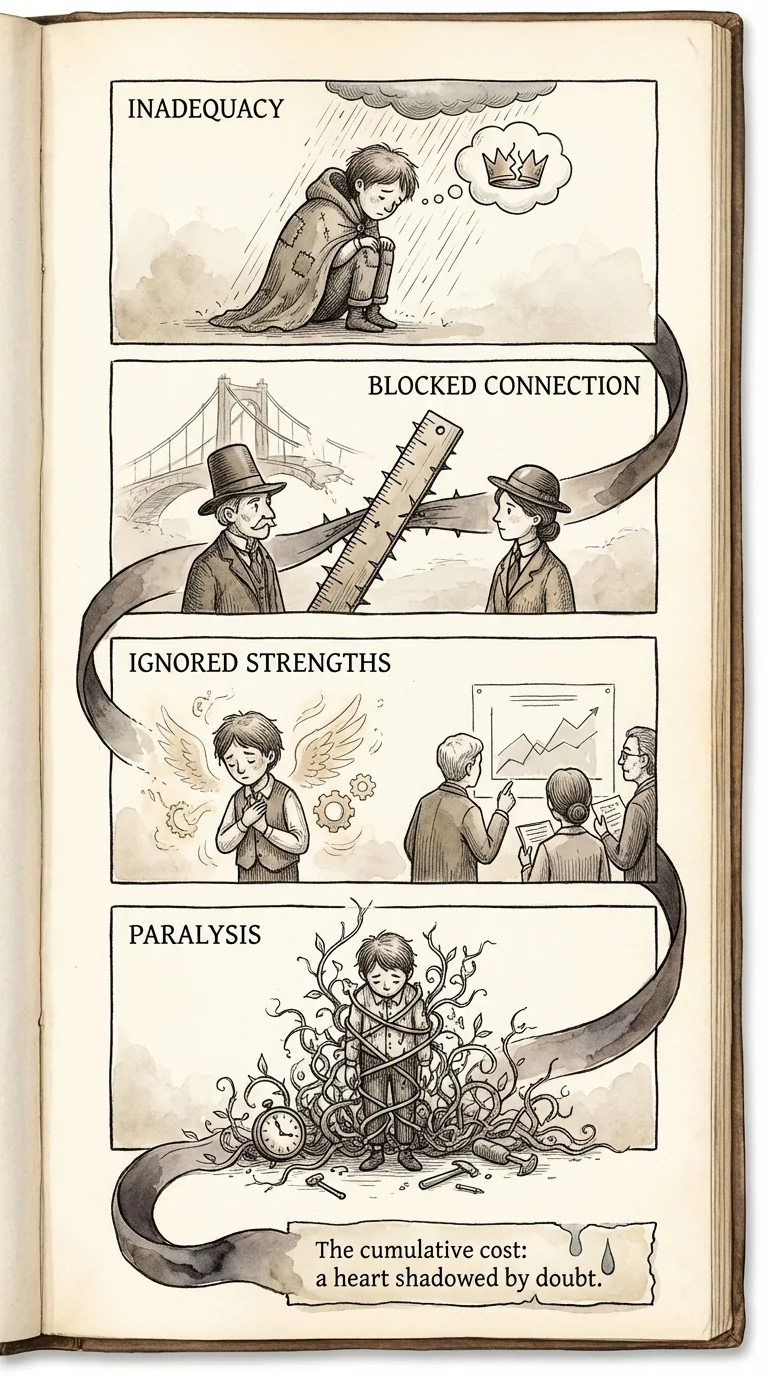
Comparison does real damage. It creates inadequacy: 'I should be like them. I'm not. Something's wrong with me.' It prevents authentic connection—hard to connect with someone you're using as a measuring stick. It ignores your unique strengths (your quiet thoughtfulness isn't inferior to someone's loud energy, just different). And it paralyzes action: 'I'll never be like them, so why try?' Comparison is a confidence poison.
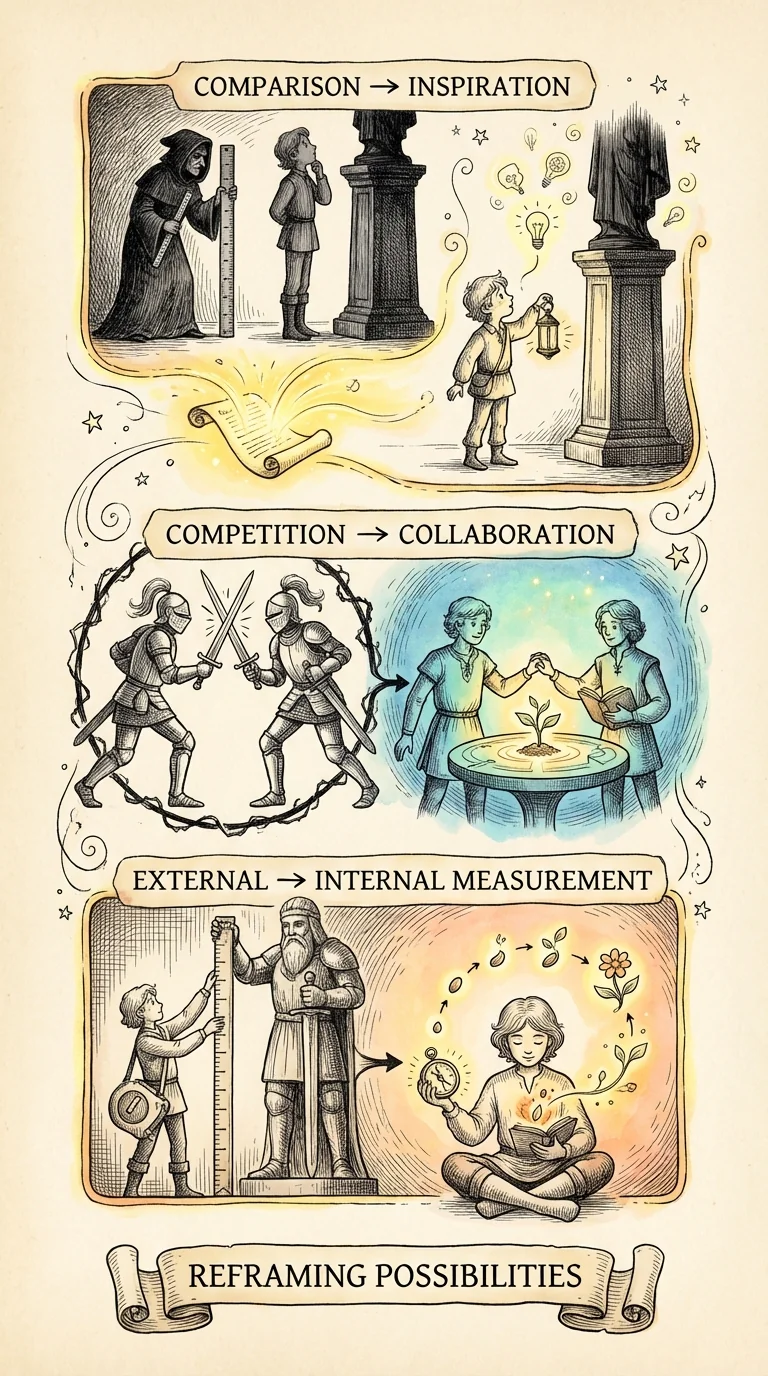
The reframe: From comparison to inspiration. Comparison: 'They're confident. I'm not. Something's wrong with me.' Inspiration: 'They seem comfortable in social situations. I wonder what I can learn from their approach?' Same person. Different mindset. From competition to collaboration. Competition: 'If they're winning, I'm losing.' Collaboration: 'We're all learning. What works for them? What works for me?' Not a zero-sum game. From external to internal measurement. External: 'Am I as confident as them?' Internal: 'Am I more confident than last month?' Progress from YOUR baseline, not someone else's.
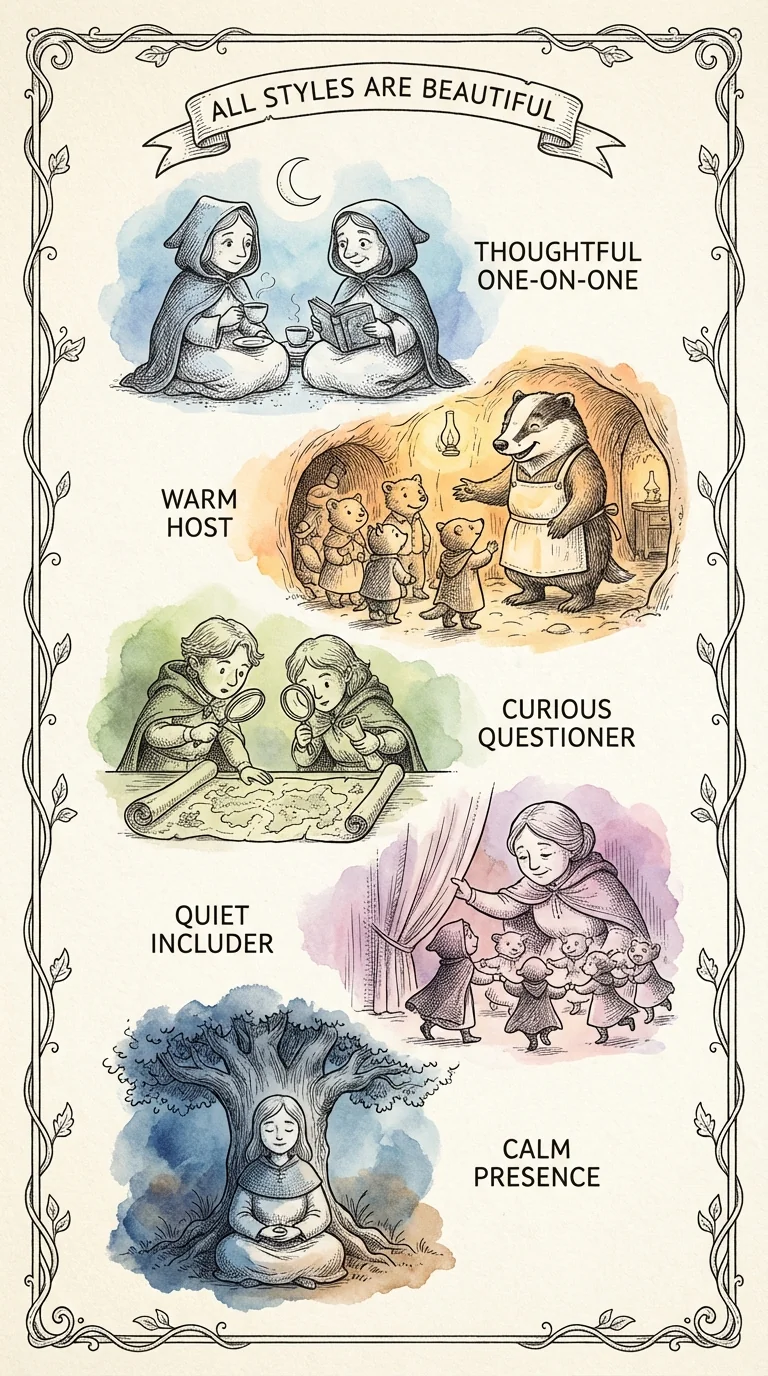
Here's what matters: Your unique social style. Not everyone needs to be the extroverted life-of-the-party. Confidence can look like: Thoughtful one-on-one conversations (introvert strength). Warm hosting that makes others comfortable (caregiver strength). Asking insightful questions (curiosity strength). Creating space for quiet people to contribute (inclusion strength). Being the calm, steady presence (grounding strength). Your job isn't to be a poor imitation of someone else. Your job: Be the most confident version of YOUR style.
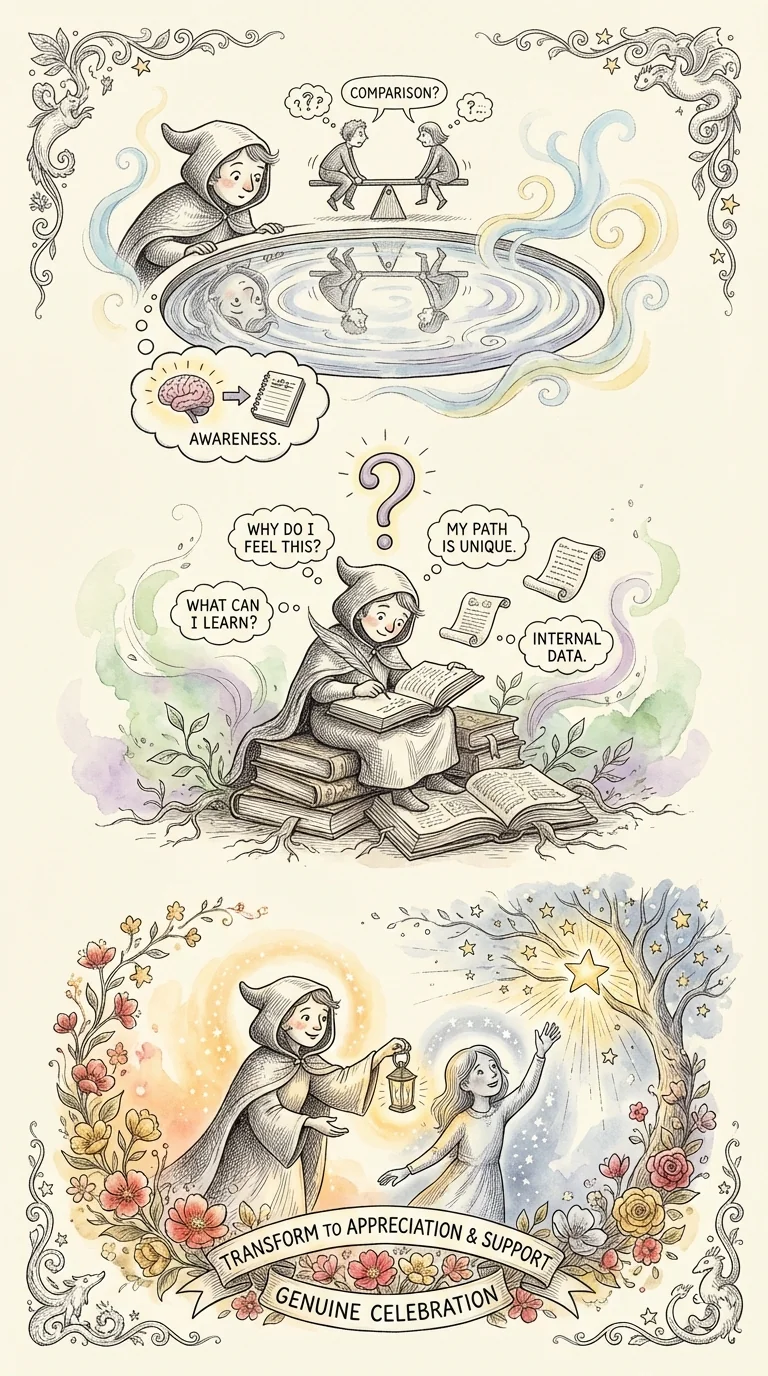
When you notice comparing yourself to someone, use it as data. 'I'm comparing. That means I'm feeling insecure right now.' What need am I trying to meet by comparing?' Then redirect. 'What do I appreciate about myself? What am I proud of from my own journey? How can I support this person instead of compete?' You can appreciate someone's confidence without making yourself less. They have strengths. You have strengths. You're both valuable. You're both learning and growing.
Part 2: Celebrating Unique Strengths
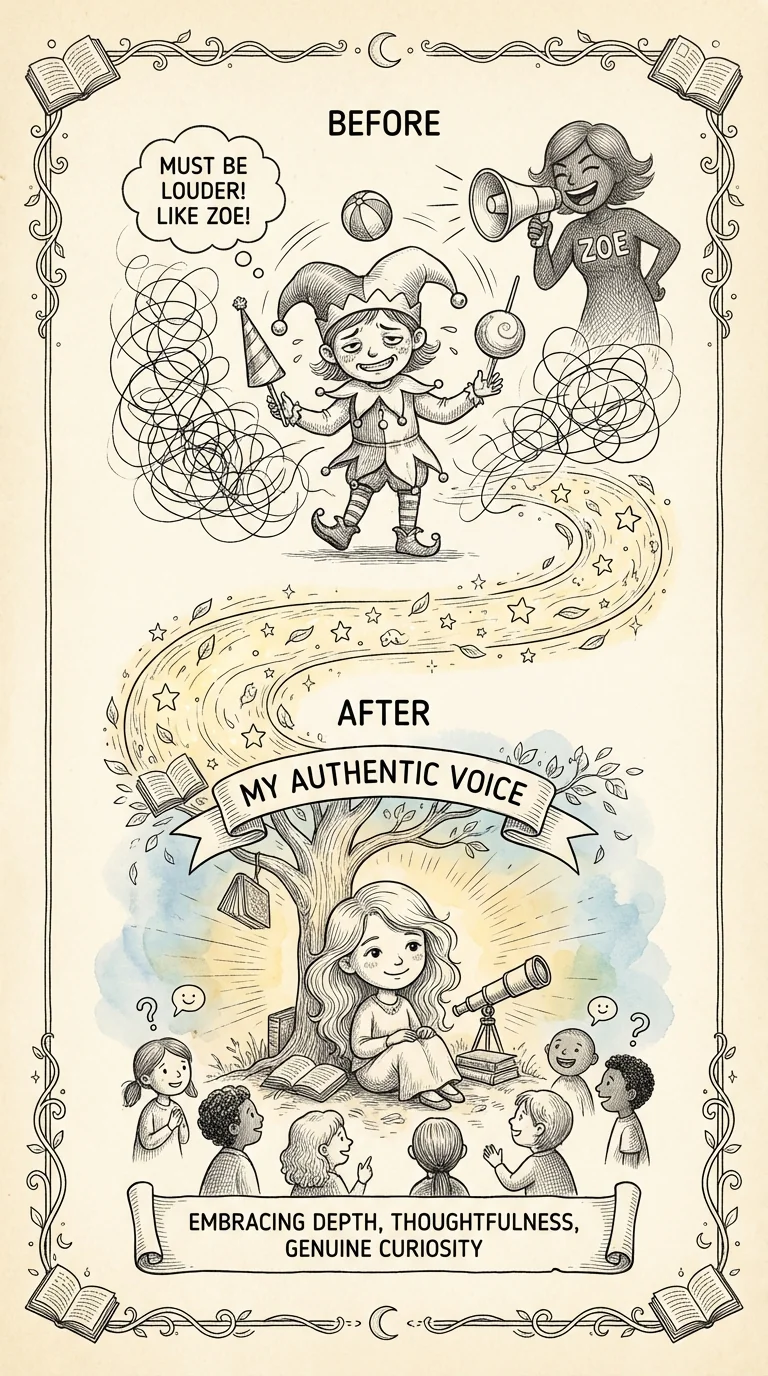
Meet Mia. She spent years trying to be like her outgoing friend Zoe—loud, funny, center of attention. Result: exhausting, felt fake, confidence plummeted because she kept 'failing' to be Zoe. The shift: 'What if I stopped trying to be Zoe and leaned into MY strengths?' Mia's strengths: deep one-on-one conversations, genuine curiosity, thoughtful insights. When she embraced her style, her confidence soared. She attracted people who valued depth over performance. Key insight: Trying to be someone else is a confidence killer. Being authentically you IS confidence itself.
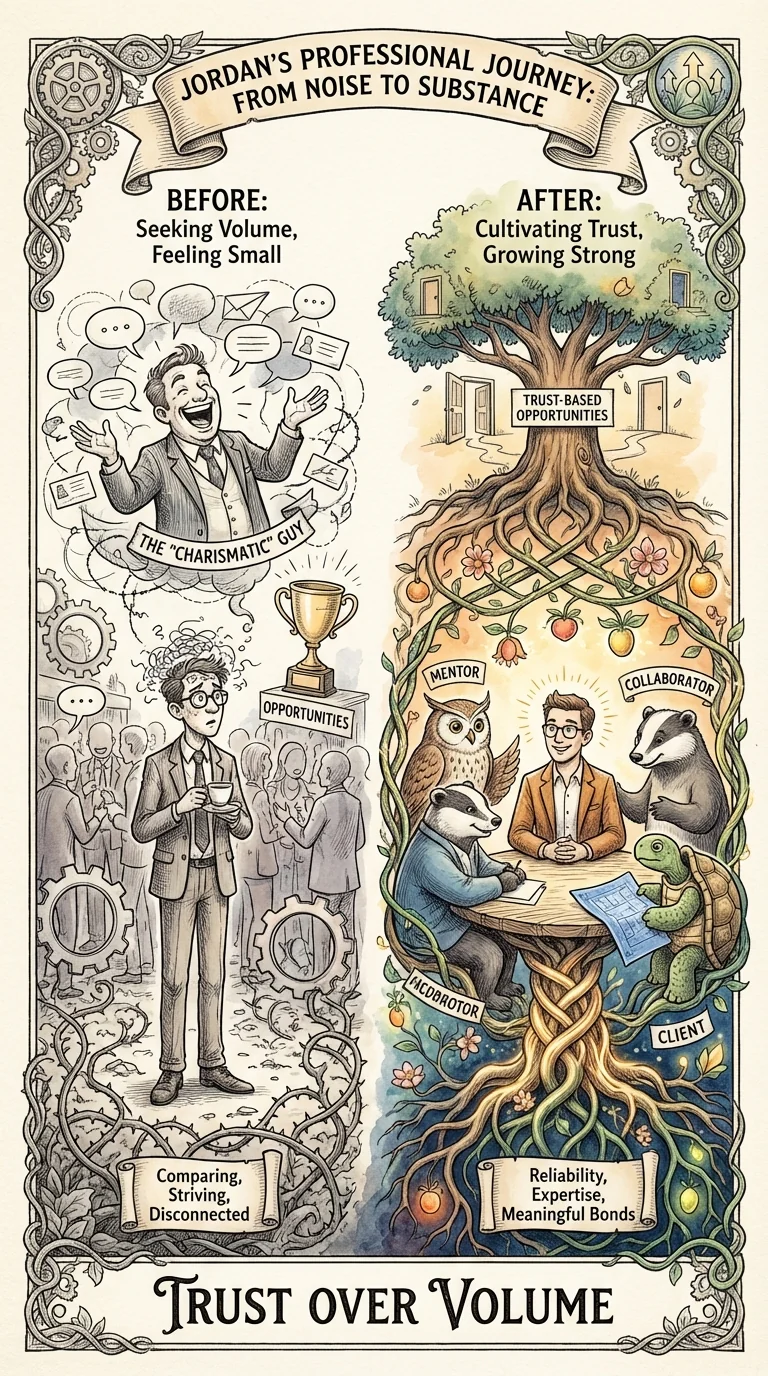
Meet Jordan. He envied his coworker who seemed to know everyone and networked effortlessly. Comparison thoughts: 'I'll never be that charismatic. I'm awkward at networking.' New approach: 'What do I bring to professional relationships?' Jordan's strengths: follow-through, depth of expertise, loyalty to connections. He stopped trying to work the room and started building fewer but deeper professional relationships. Result: More career opportunities than the 'charismatic' coworker because people knew they could count on Jordan. Key insight: Different strengths, different styles, equal validity.
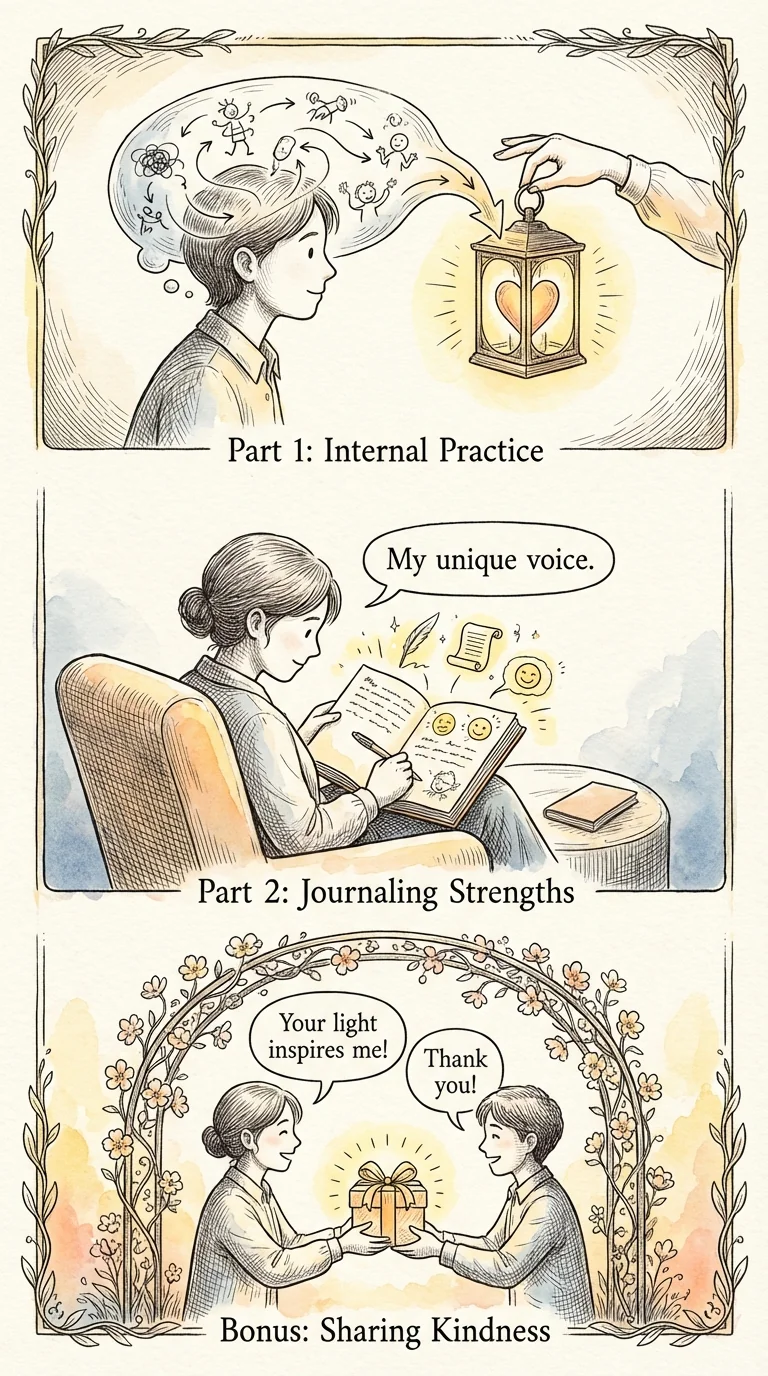
Your practice today: Part 1—Catch comparison. When you notice comparing yourself to someone: Acknowledge it ('I'm comparing myself'). Redirect ('What do I appreciate about myself?'). Choose inspiration (curious) over inadequacy (judgmental). Part 2—Appreciate your unique style. Write down three unique strengths you bring to social interactions. One time your specific style helped create connection. One compliment you've received about how you interact with others. Bonus: Compliment someone you'd normally compare yourself to.

After writing your strengths, pause and feel the difference. You probably realized: Some of your 'weaknesses' are actually unique strengths (introversion isn't less than extroversion, it's different). You've impacted others with your specific style. People have actually complimented the real you. You don't need to be someone else. You just needed to stop comparing long enough to see what you actually offer.
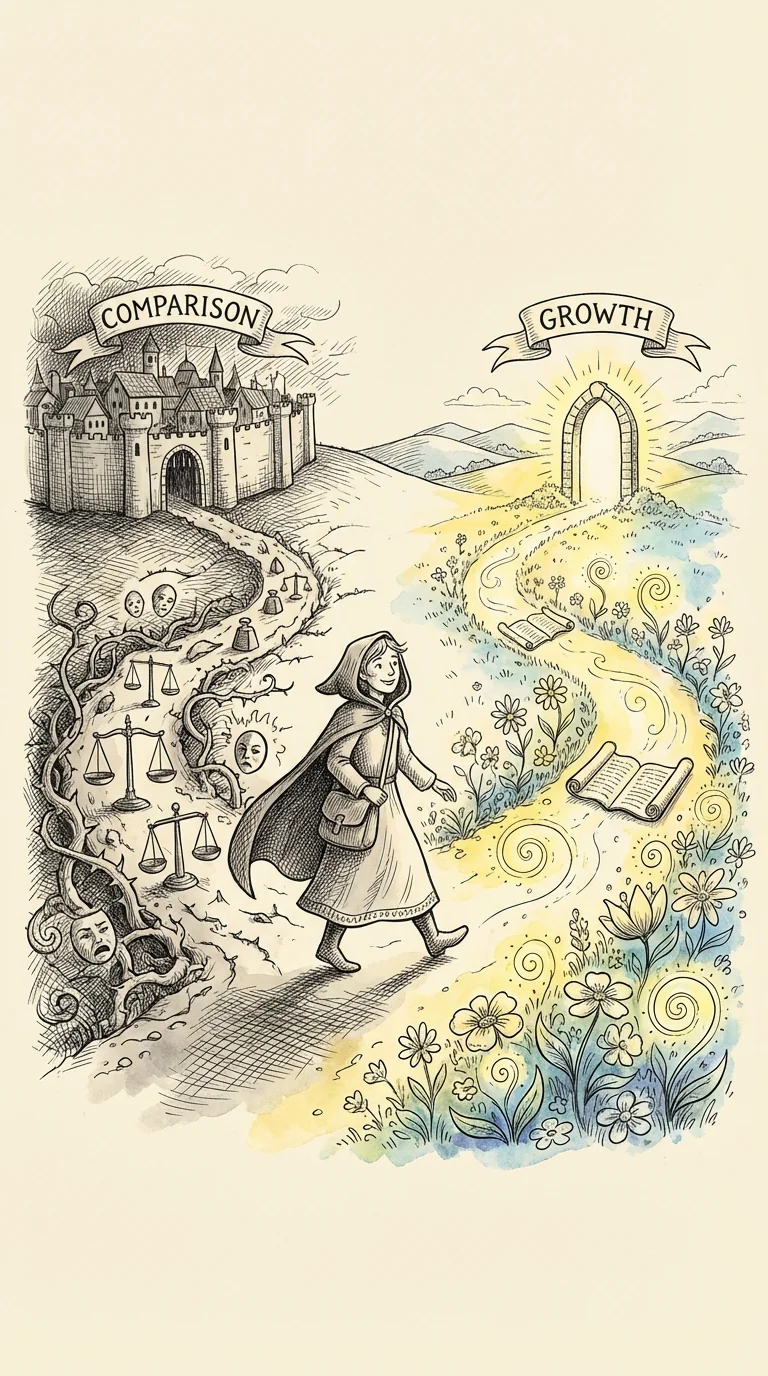
The biggest shift: From 'Why am I not like them?' to 'What am I becoming?' From 'I'm failing at being someone else' to 'I'm succeeding at being myself.' This shift changes everything. You stop measuring against others' exterior and start measuring your own growth. And growth feels so much better than comparison ever did.
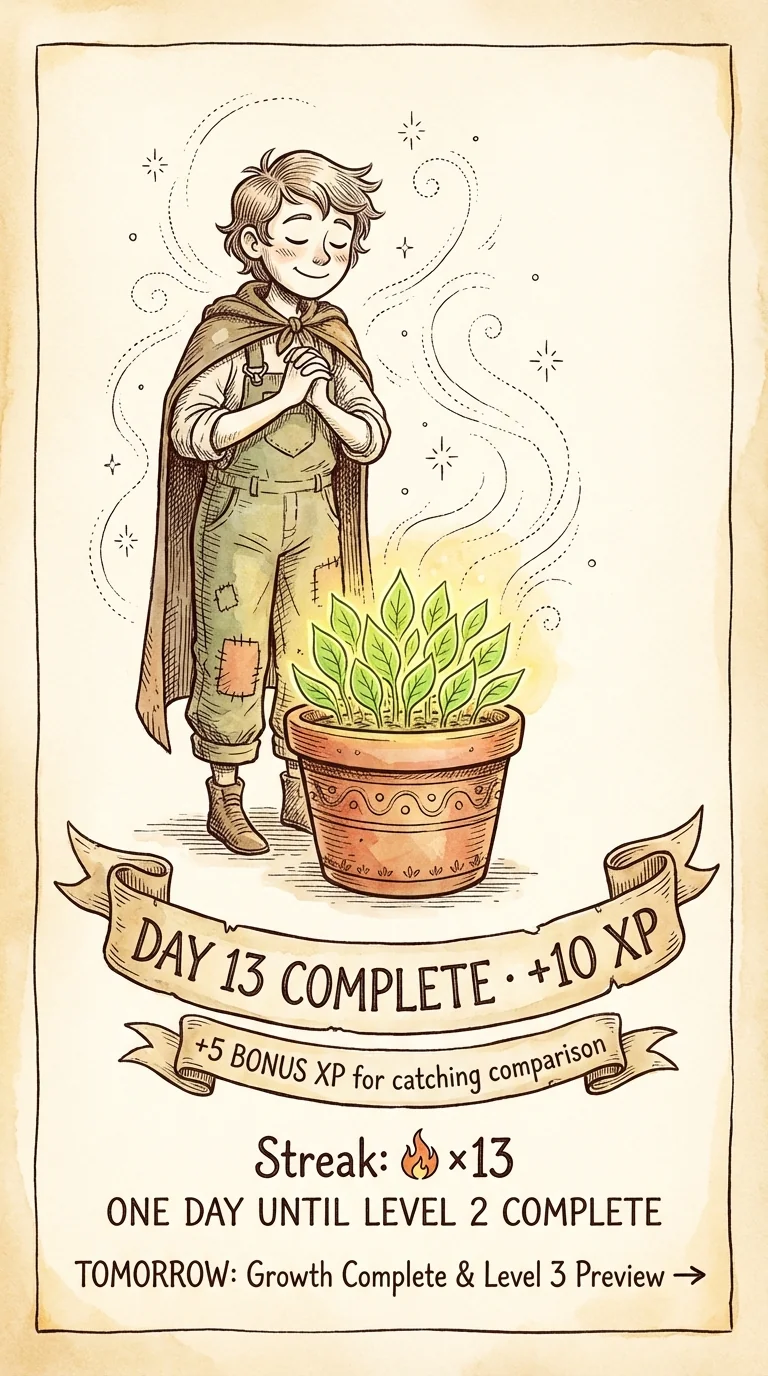
Day 13 complete. Thirteen leaves on your terracotta plant. Tomorrow is Day 14—Level 2 complete and celebration. Your banner reads: 'DAY 13 COMPLETE · +10 XP.' You've learned all the practical skills of social confidence: listening, starting conversations, flowing dialogue, setting boundaries, handling awkwardness, and ending comparison. Tomorrow: You celebrate two weeks of growth and glimpse Level 3 ahead.