Part 1: The Power of Saying No
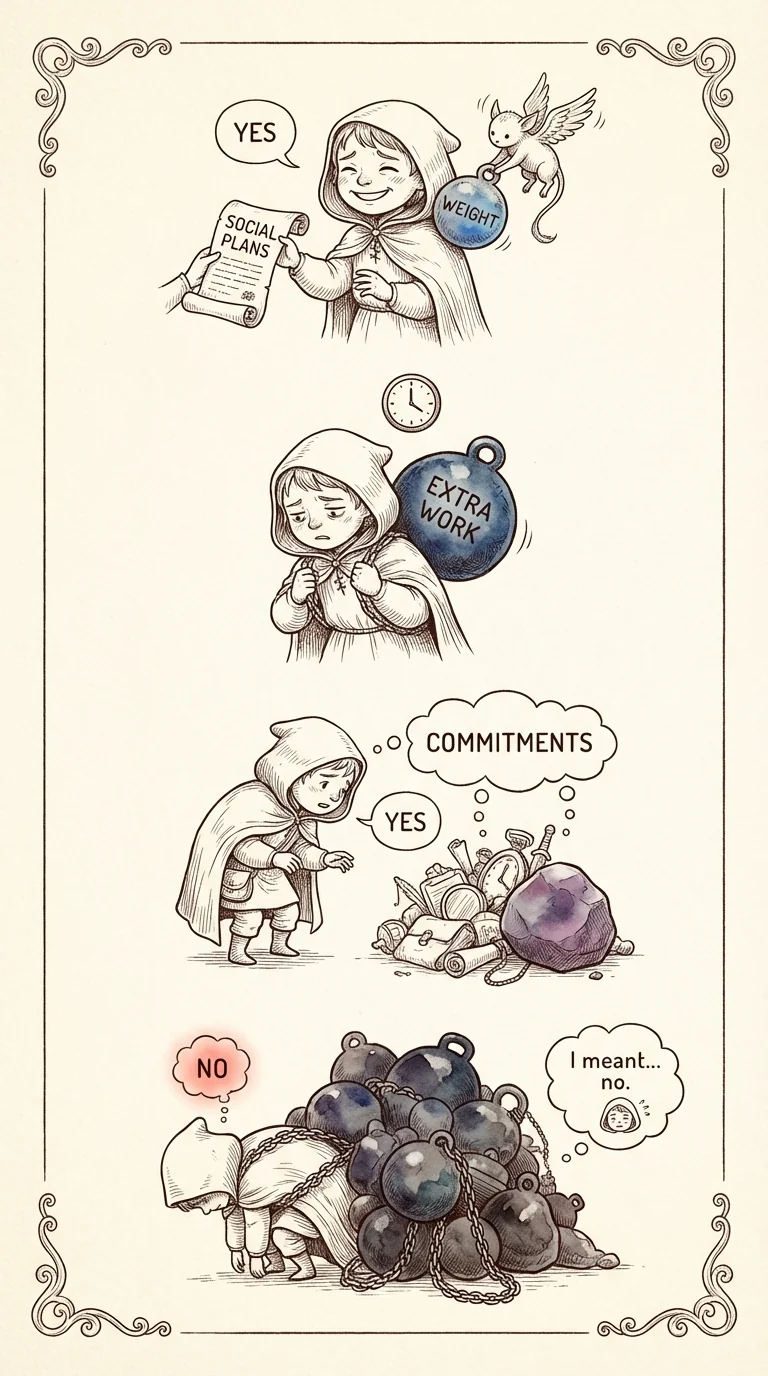
Think about how many times you've said 'yes' when you meant 'no.' You accepted an invitation when you needed rest. You took on extra work when already overloaded. You agreed to plans that didn't align with your values. You said 'it's fine' when it really wasn't. The cost: exhaustion, resentment, and something deeper—loss of self-trust. Confidence erodes when you don't honor yourself.

Here's the paradox that changes everything: Saying no builds confidence. Every time you honor your needs and boundaries, you send your brain a message—'My needs matter. I'm worth protecting.' You build self-trust. And relationships? They get stronger, not weaker, because they're built on authenticity, not people-pleasing. When you protect your energy, you have MORE to give to what actually matters.
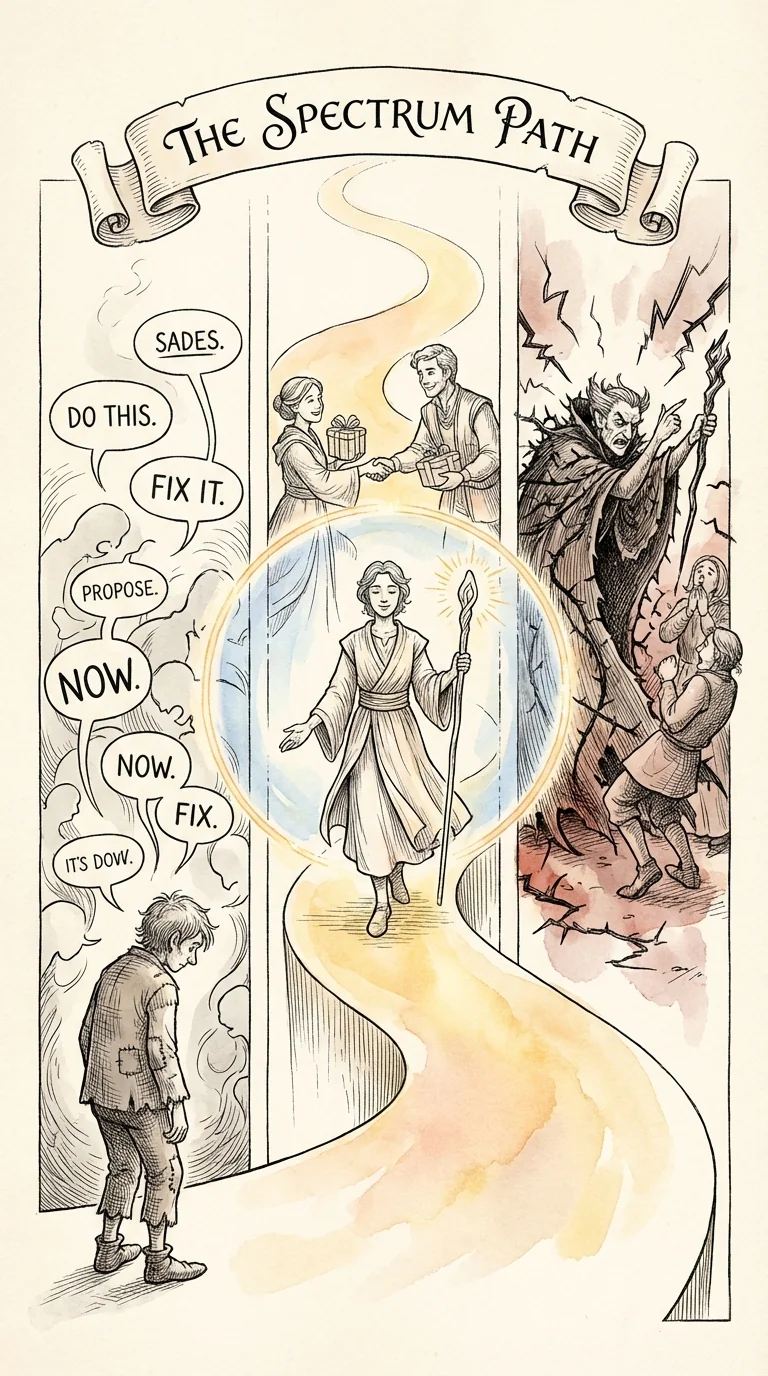
There's a spectrum: Passive (ignore your needs, prioritize others, build resentment). Assertive (express needs clearly, respect self AND others). Aggressive (express needs at others' expense). The goal is the assertive middle. You're not selfish. You're not harsh. You're just honest about what works for you and what doesn't. That honesty is where real confidence lives.
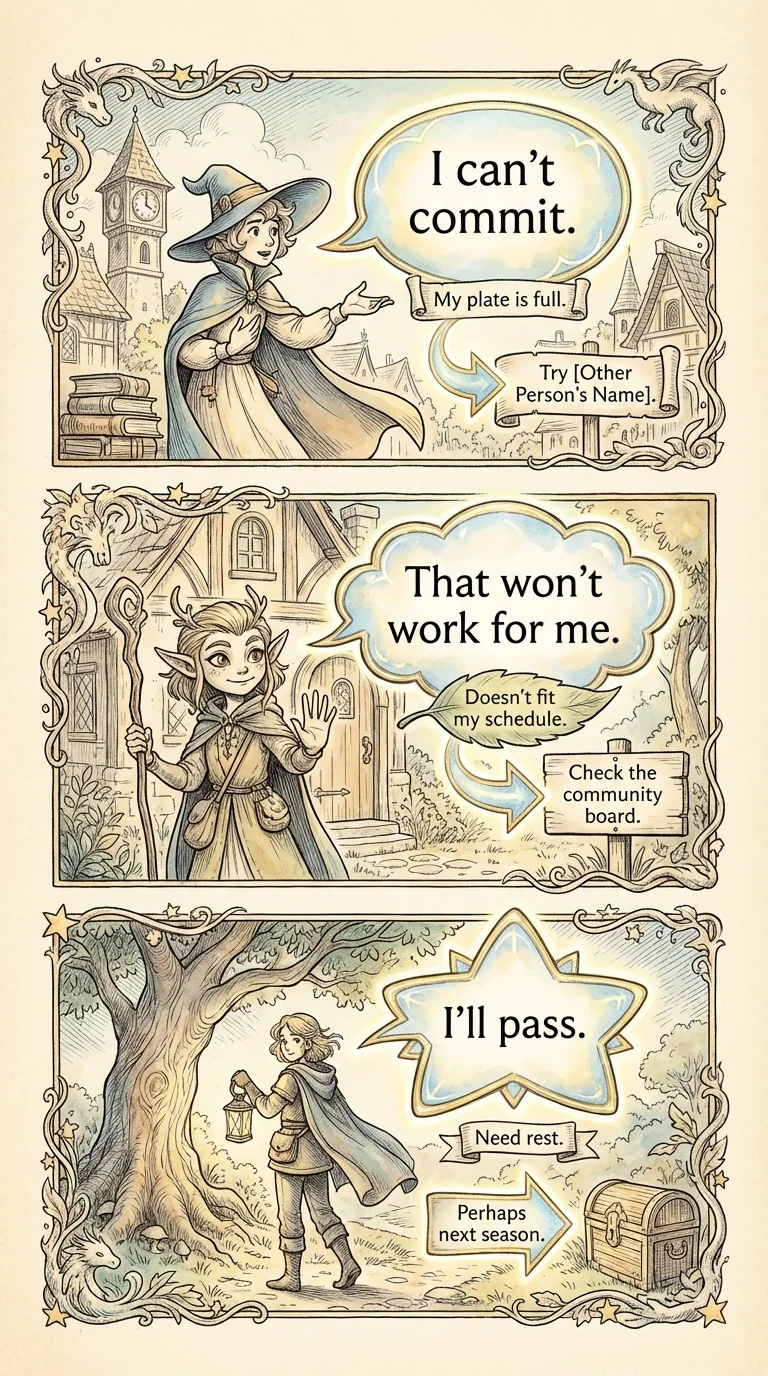
The simple assertive no: 'I can't commit to that right now.' 'That won't work for me.' 'I'll have to pass.' No long justification. No over-explanation. 'No' is a complete sentence. If you need to add context: 'I'm at capacity with current projects.' Keep it brief. Avoid long justifications that invite negotiation. If you want to help but differently: 'I can't do the whole thing, but I could help with [this specific part].' But only offer alternatives if they're authentic.
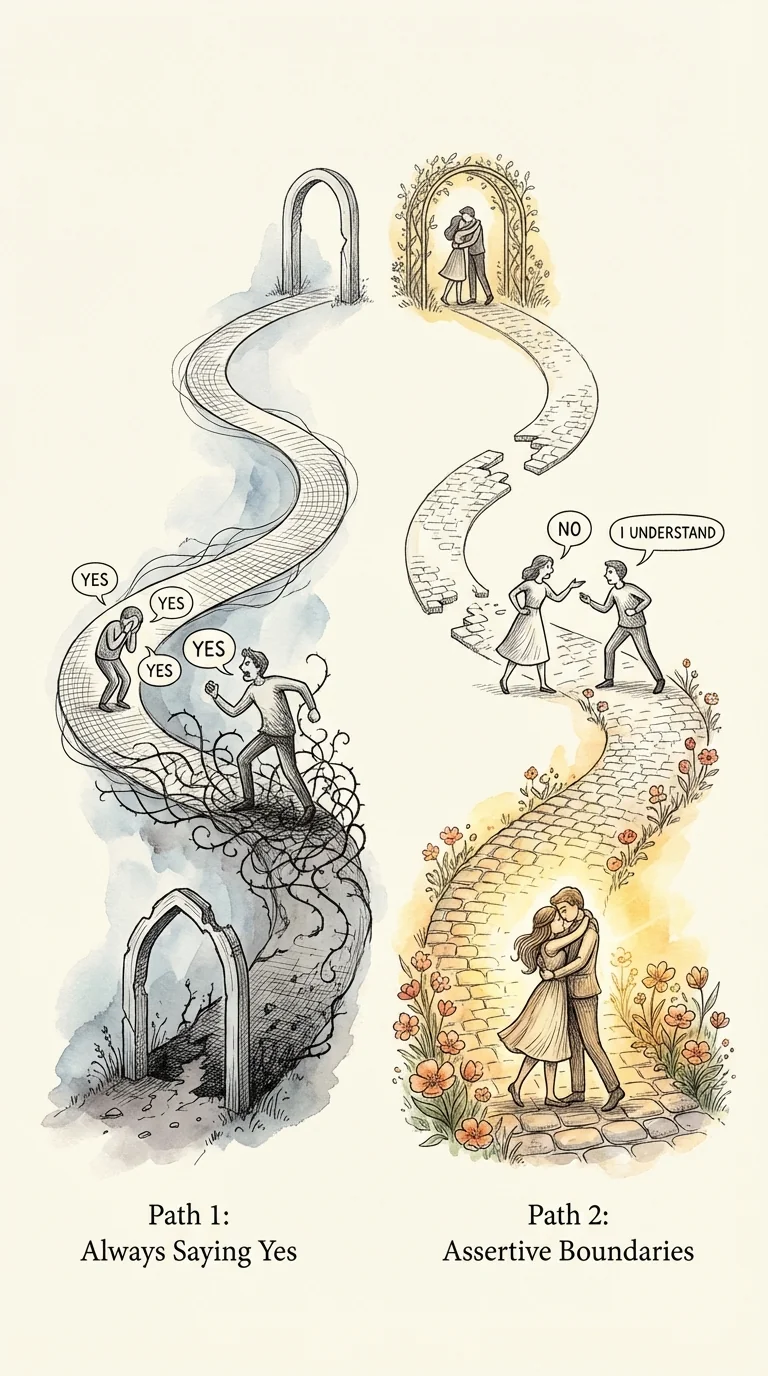
The guilt problem: Saying no feels hard because we fear disappointing others, seeming selfish, damaging relationships. But the truth is: Healthy relationships respect boundaries. Always saying yes breeds resentment—which damages relationships more than occasional no ever could. You teach people how to treat you through your boundaries. Your needs matter as much as theirs.
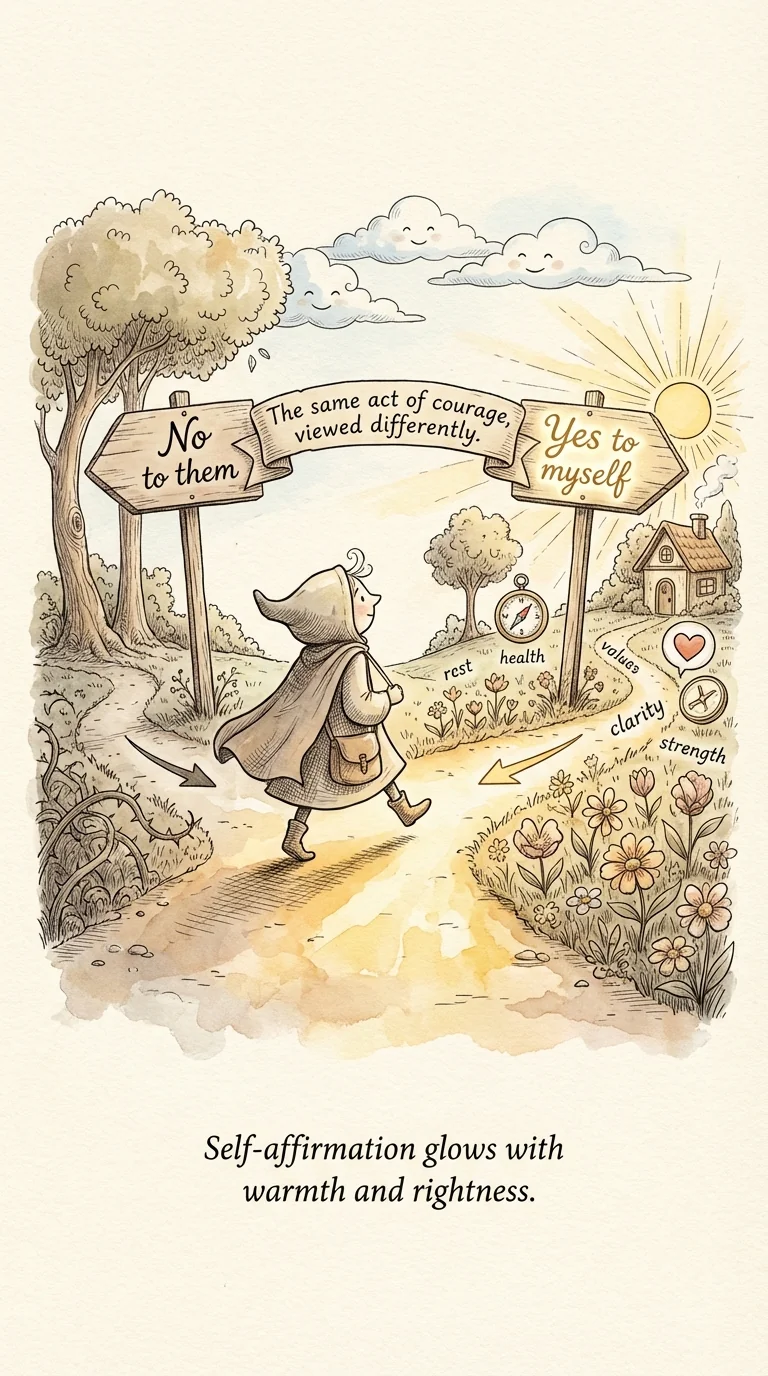
Reframe it this way: Saying no to them is saying yes to yourself. No to the extra project is yes to your health and focus. No to the invitation is yes to the rest you need. No to the boundary-crossing is yes to your values. When you see it that way, saying no isn't selfish—it's self-respect. And self-respect is the foundation of authentic confidence.
Part 2: Boundaries in Action
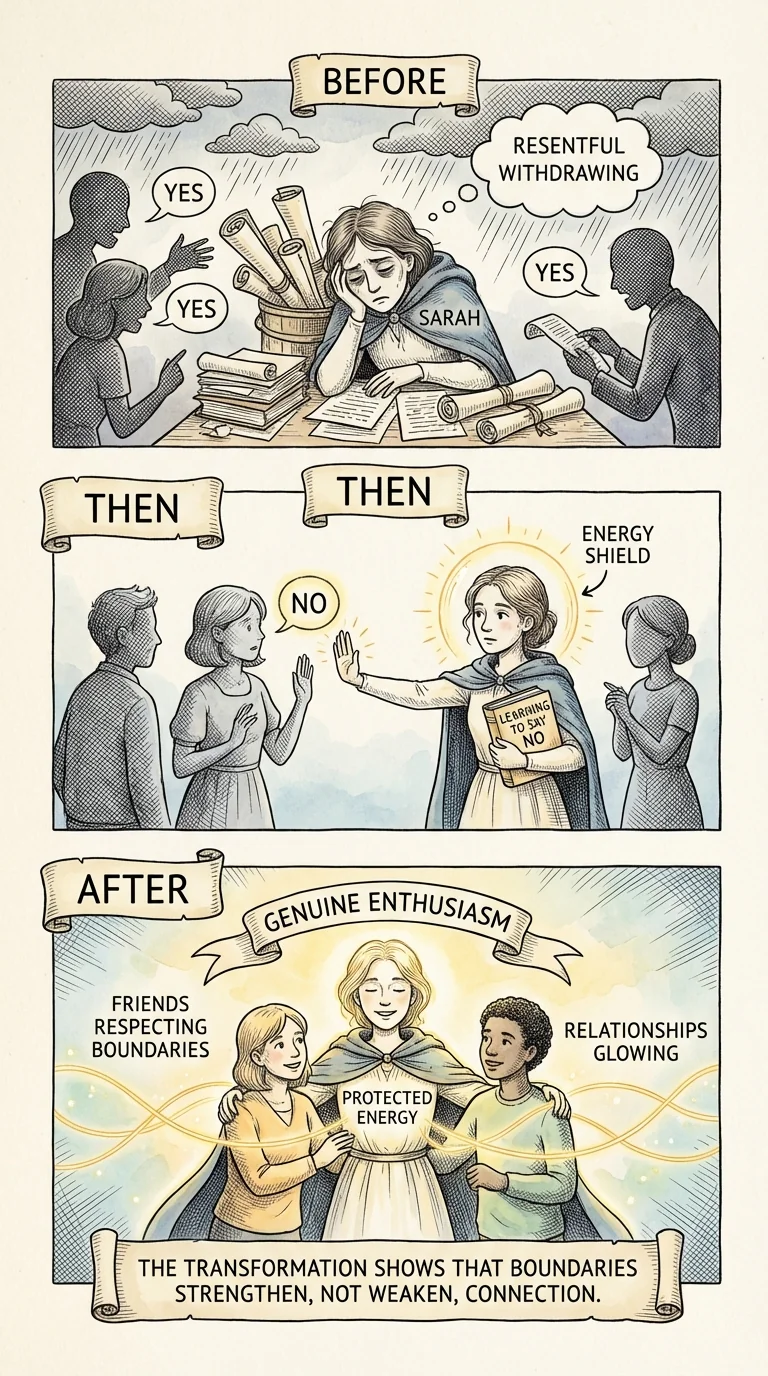
Meet Sarah. She said yes to every social invitation, terrified of disappointing friends. The result: exhausted, resentful, and paradoxically, avoiding everyone. Then she tried something radical: Saying no. Not to every invitation, but to one out of three. 'I need to recharge this weekend, but let's plan something next week!' Surprising result? Her friends respected the boundary. She had MORE energy for events she did attend. And relationships got stronger, not weaker.
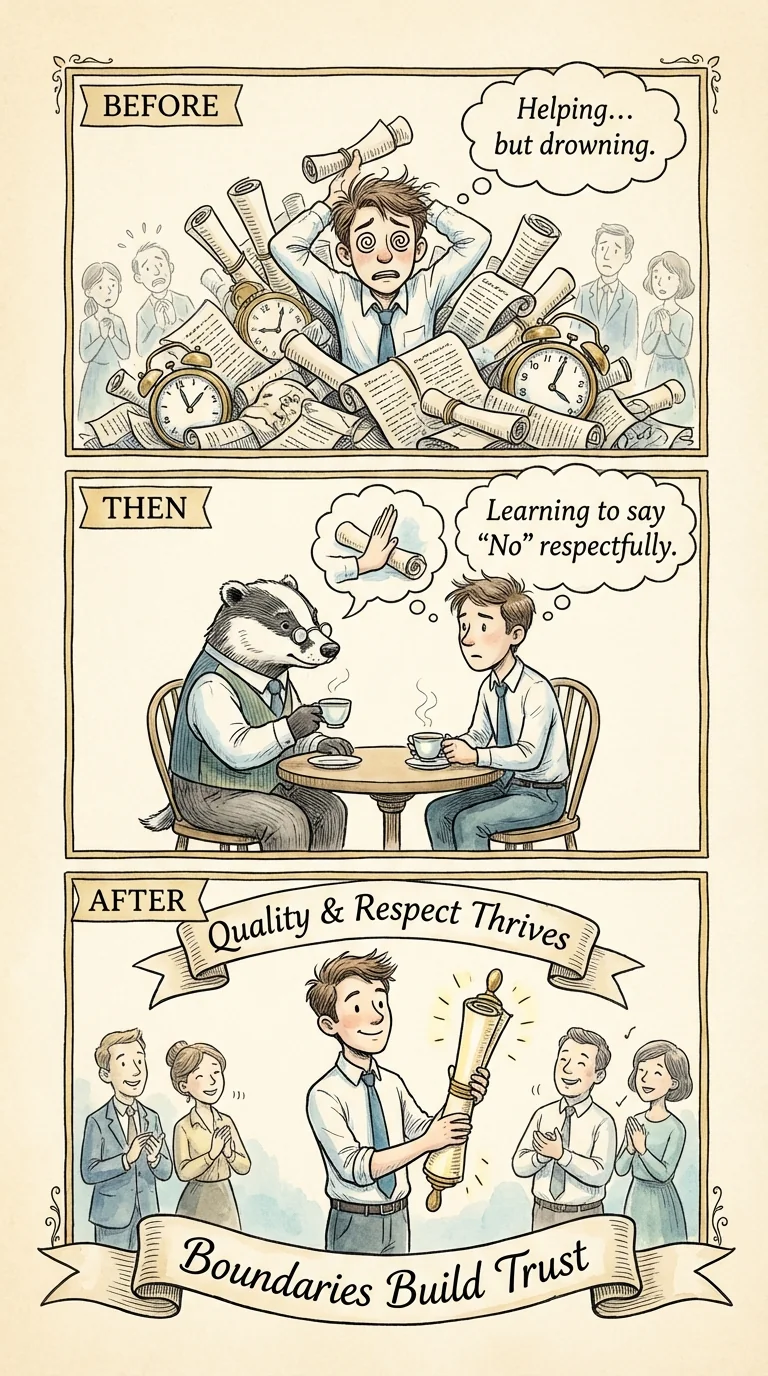
Meet Tom. He took on every project at work to seem like a 'team player.' Result: overwhelmed, burned out, quality of work suffering. He shifted to something simple: 'I want to help, but I'm at capacity. I could take this on after [current project] or [colleague] might have bandwidth now.' Surprising result? He was respected MORE, not less. Seen as someone who delivers quality, not just volume. Integrity and boundaries go together.
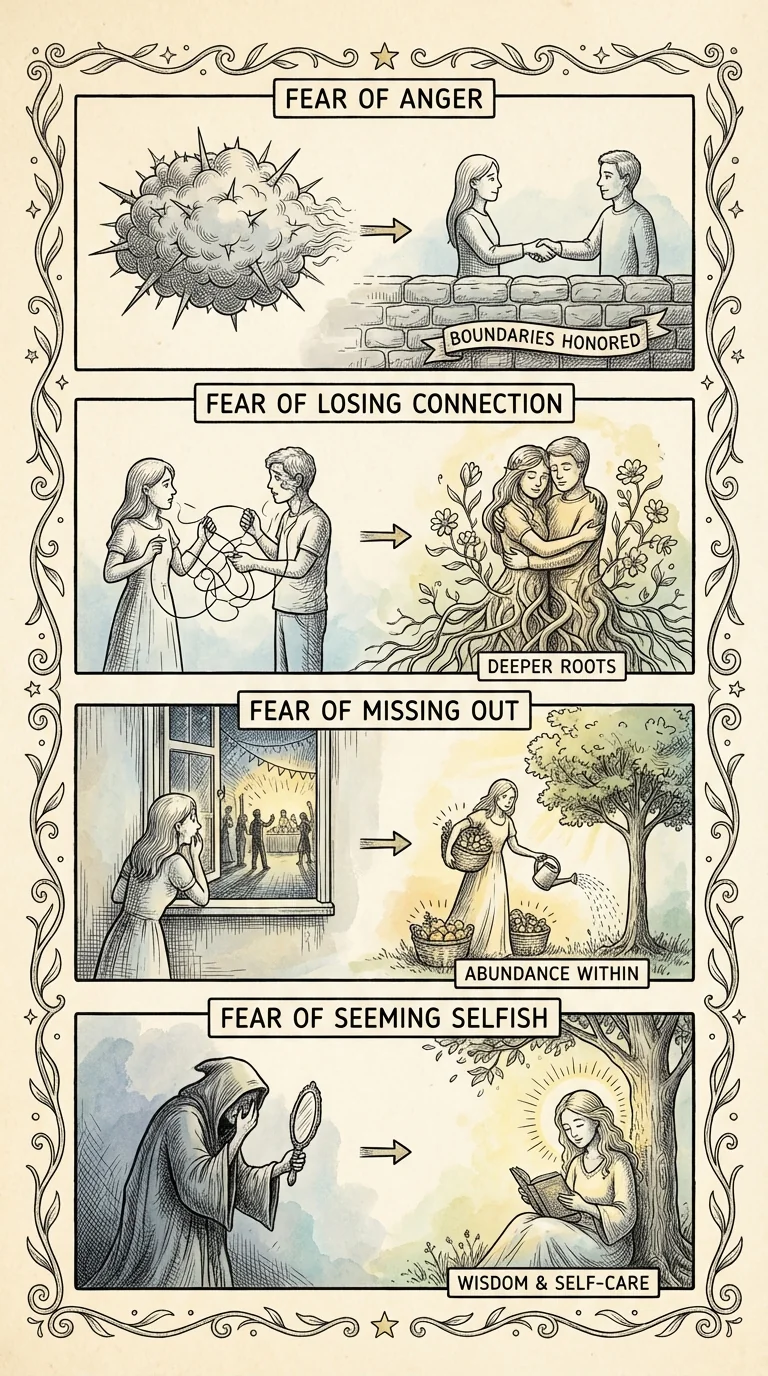
Common fears: 'They'll be mad at me.' (If they react with anger to polite no, that's about them, not you.) 'They won't like me anymore.' (If the relationship only works when you always say yes, it's not real.) 'I'll miss out.' (Saying yes to everything means saying no to rest and what you actually care about.) 'I'm being selfish.' (Self-care isn't selfish—you can't pour from an empty cup.) The reframe: Boundaries are healthy, necessary, and they protect relationships.

Your practice today: Say no to ONE thing. Start small if you need to—decline a spam call, say no thanks to an offer you don't want, skip an optional activity when tired. Or go bigger if ready—decline a social invitation to rest, say no to a small favor, set a time boundary. After: What did you say no to? How did you phrase it? How did they respond? Most importantly: How do YOU feel having honored your boundary?
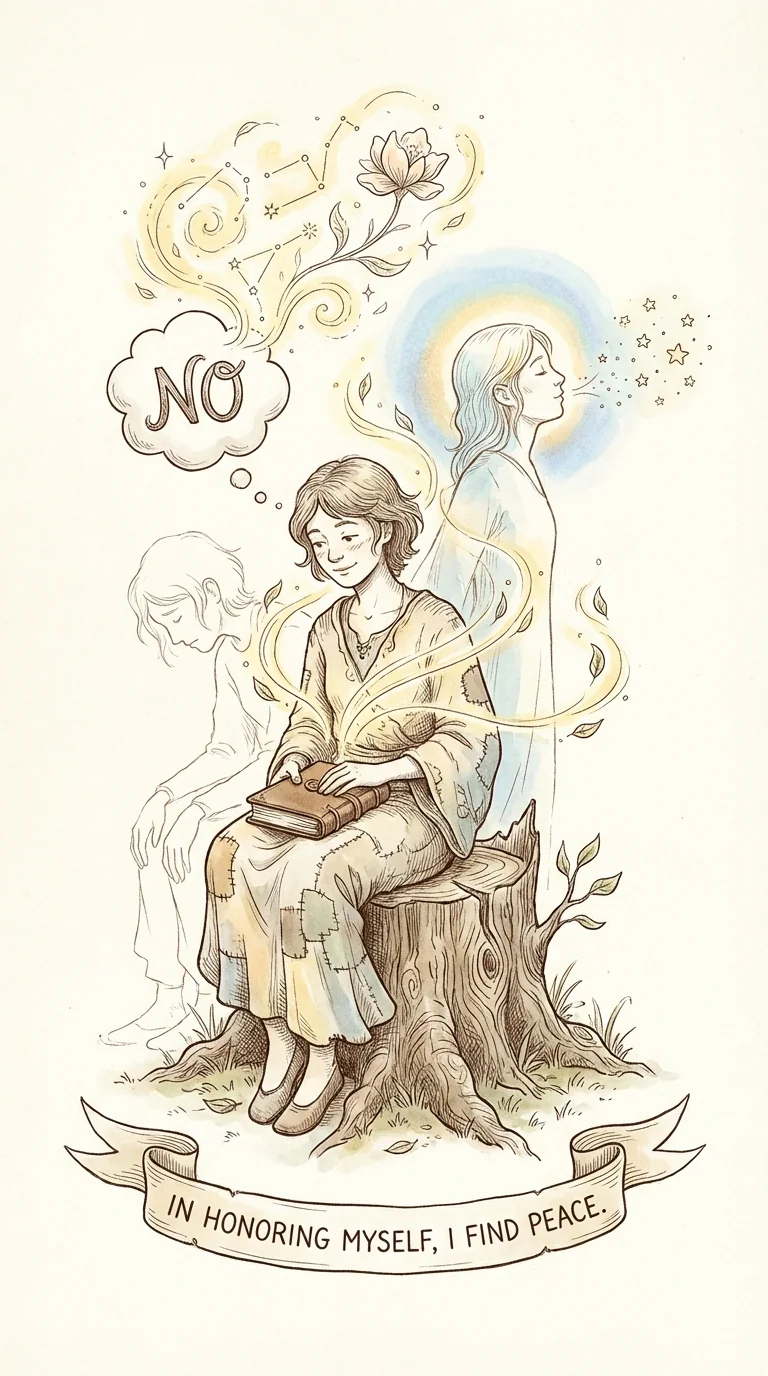
After you say no, pause and feel the difference. Notice how it feels in your body. Notice the energy it creates. Notice if it gets easier after the first no. Most people find: Saying no doesn't destroy relationships—it clarifies them. It doesn't make you selfish—it makes you honest. It doesn't weaken confidence—it's the foundation of real confidence. You're teaching yourself and others that your needs matter.
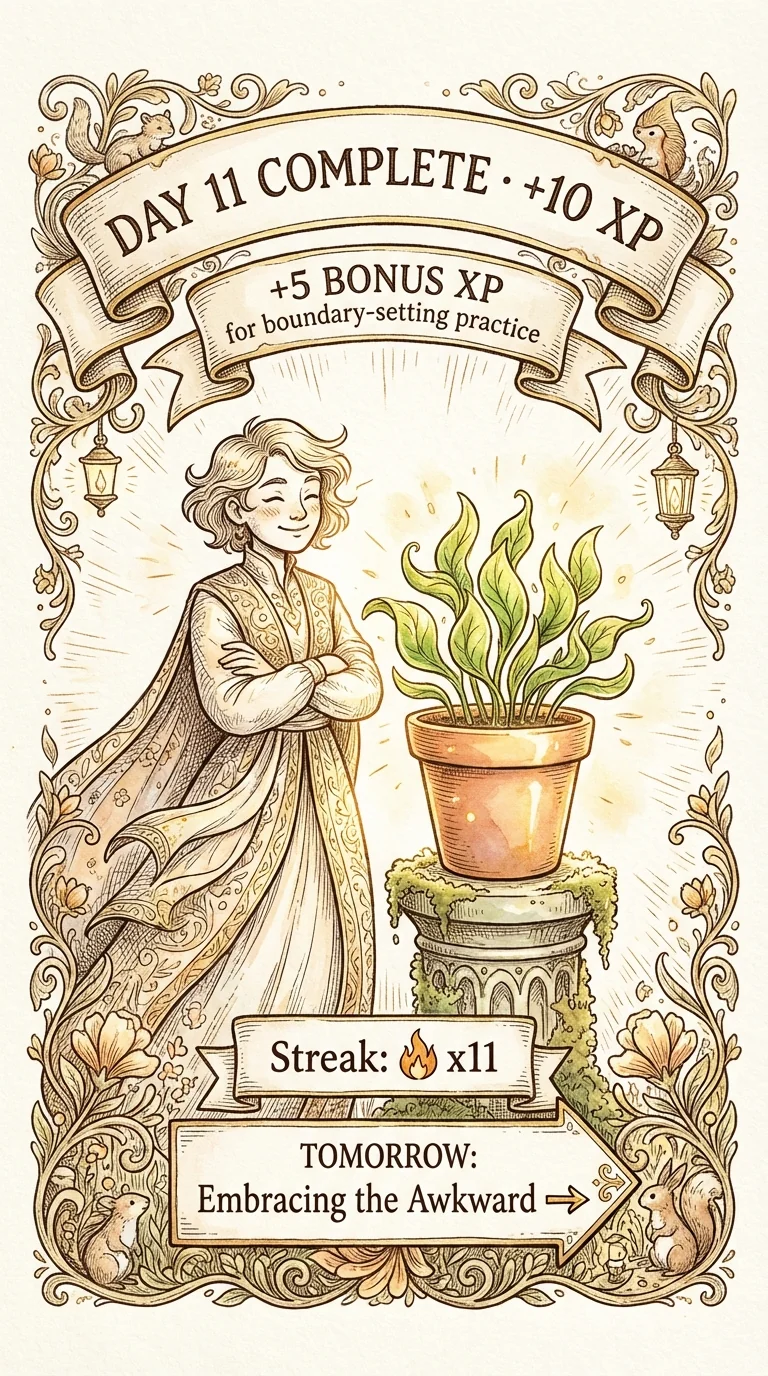
Day 11 complete. Eleven leaves on your terracotta plant. Eleven days of building skills and courage. Your banner reads: 'DAY 11 COMPLETE · +10 XP.' You've learned that confidence includes the power to say no—to protect yourself, honor your values, and strengthen your relationships through authenticity. Tomorrow: Embracing the Awkward—learning that awkward moments are normal, and real confidence means handling them gracefully.