Part 1: Keeping Conversations Flowing
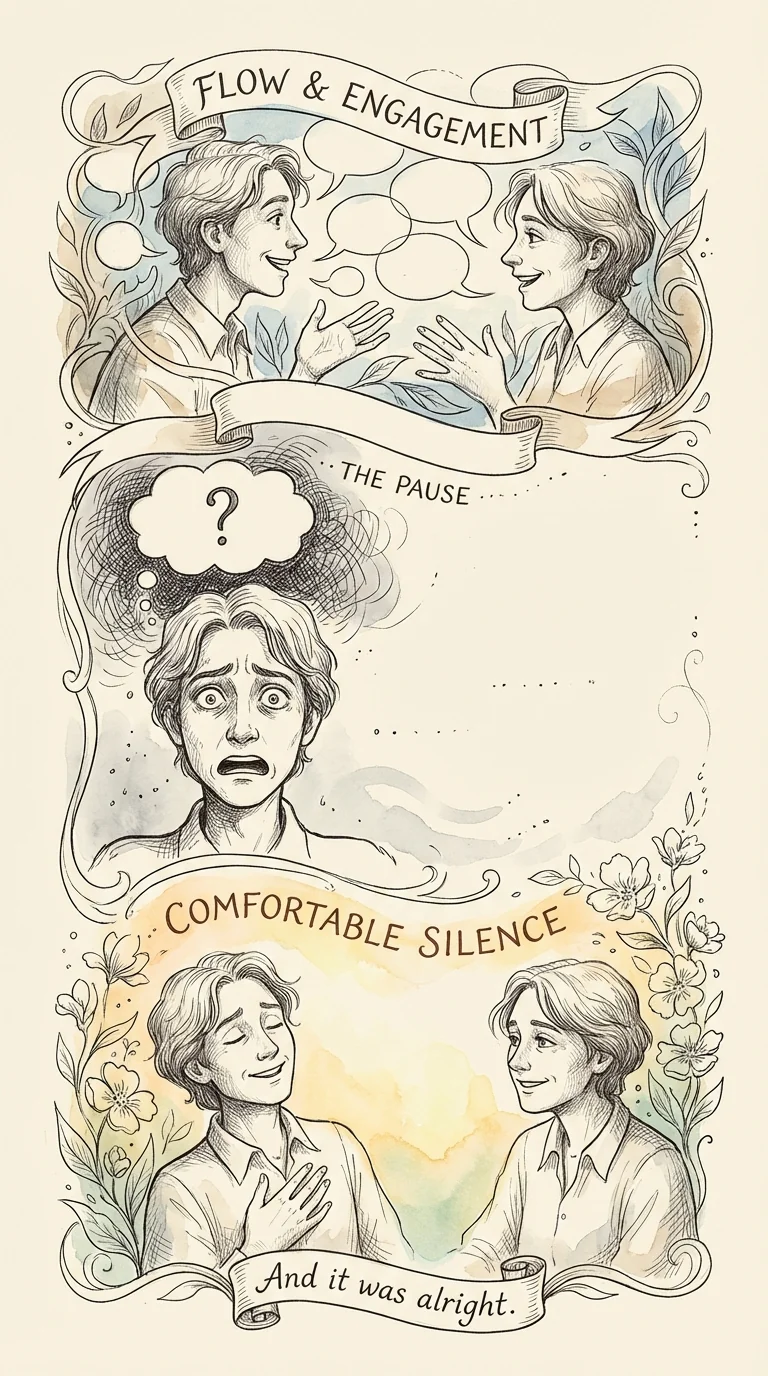
You've started conversations. Good. But now comes the post-opener moment: You're talking, things are going okay, then there's a lull. Panic sets in. 'What do I say next?' This is where many people freeze. But here's what you need to know: Good conversations don't require constant entertainment from you. They require collaboration.
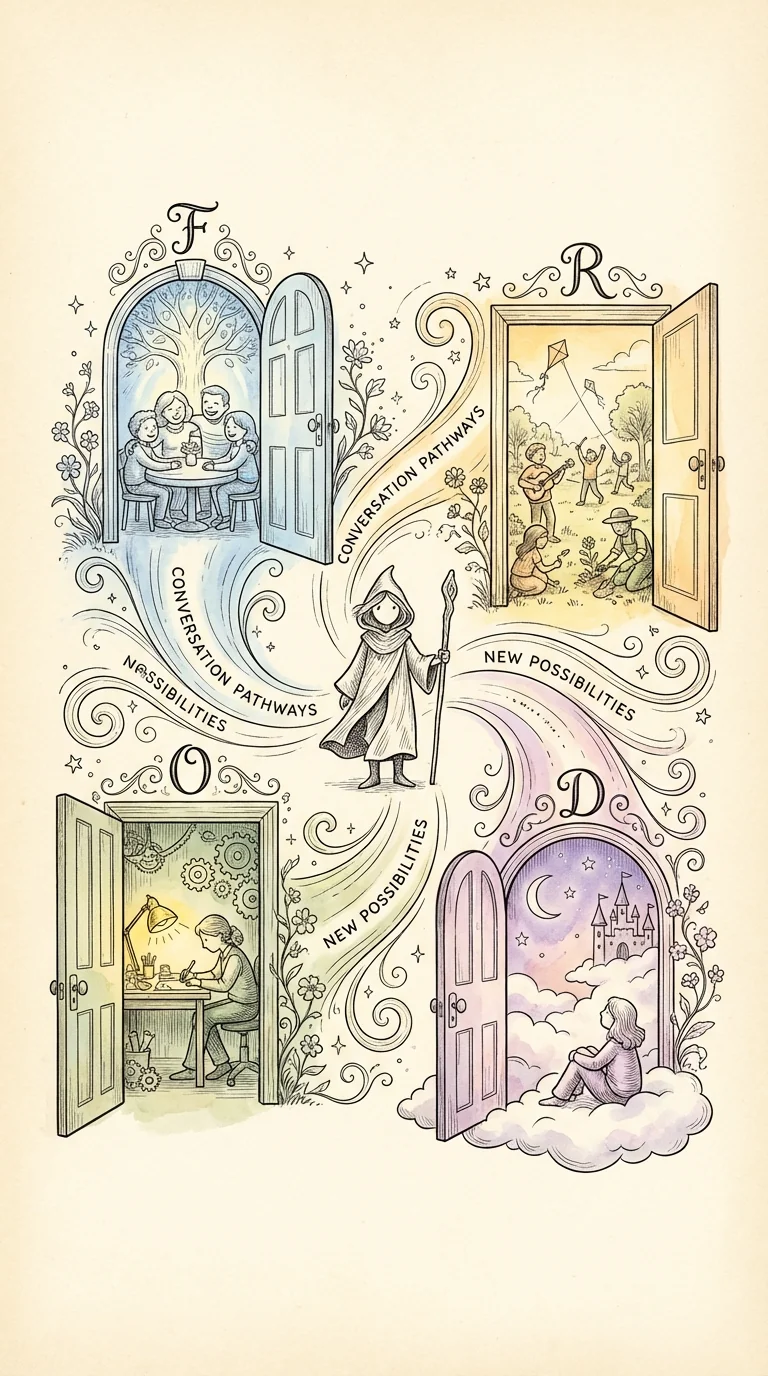
Meet the FORD method—your secret weapon when you're not sure what to ask next. F: Family. 'Do you have siblings? Where's your family from?' O: Occupation. 'What do you do? How did you get into that field?' R: Recreation. 'What do you like to do for fun? Any hobbies?' D: Dreams/Goals. 'What are you working toward? Any exciting plans coming up?' These four categories give you endless conversation material.
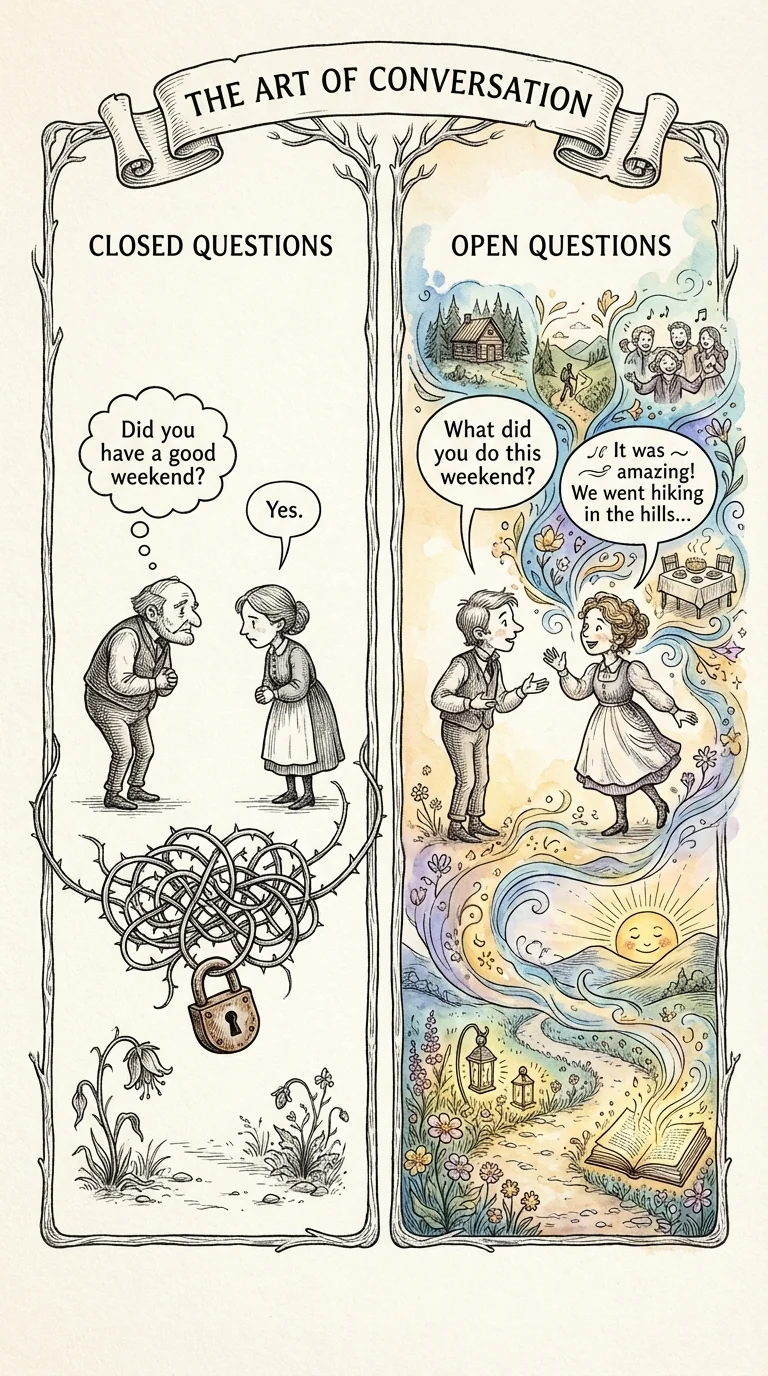
But here's a critical shift: Open-ended questions beat closed questions every time. 'Did you have a good weekend?' is a closed question—they can answer with 'Yes.' 'What did you do this weekend?' is open—they need to tell you a story. The pattern: Ask 'what/how/why' instead of 'did/do/is.' Watch how the conversation comes alive.
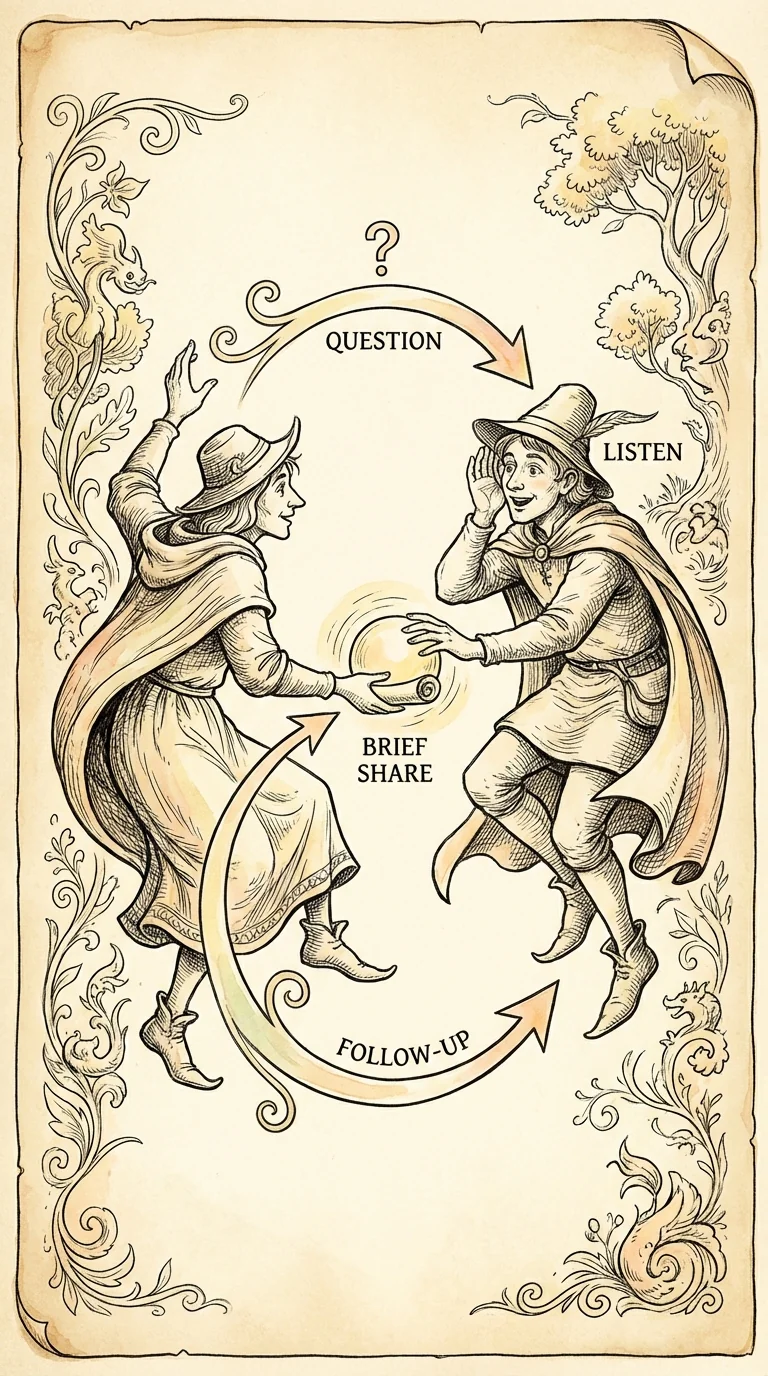
The magic ratio: Ask question. Listen fully. Share something brief and related (not a monologue—just participation). Ask a follow-up question. Repeat. This rhythm prevents interrogation (too many questions) and prevents monologue (too much talking). It's a dance. You're both leading and following. Both talking and listening.
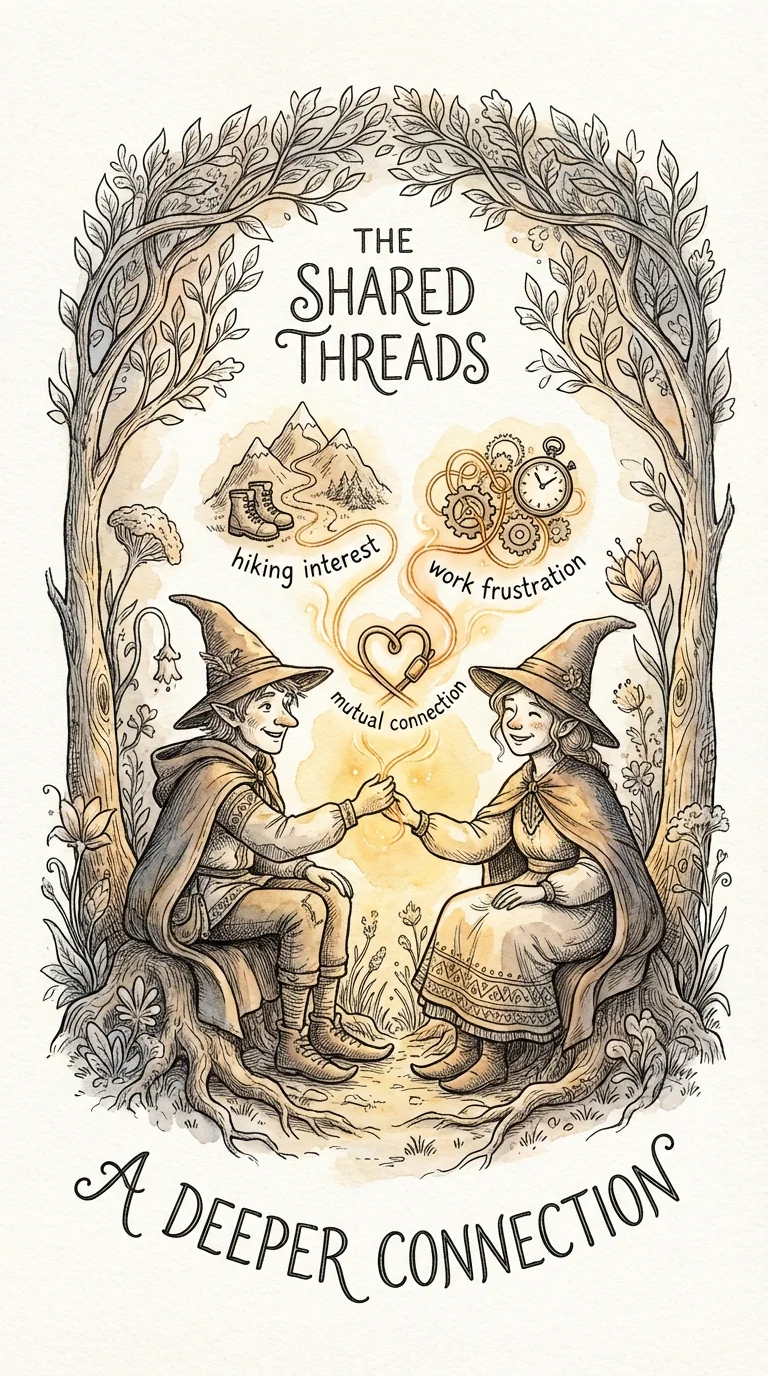
As you listen, watch for common ground: shared hobbies, similar experiences, mutual frustrations, connections you didn't expect. When you find it—and you will—the conversation deepens instantly. 'Me too! I've been thinking the same thing.' 'I've had a similar experience.' Common ground is where real connection happens. It's the moment the conversation shifts from polite to genuine.

And here's something people don't talk about: Sometimes, graceful exits matter as much as great conversations. You don't need to talk forever. You just need to know when and how to leave. A good exit sets up the possibility of a future connection. 'It's been great talking. I'm going to grab a drink.' 'I'd love to continue this—want to exchange numbers?' Simple, warm, and it leaves them feeling good.
Part 2: Conversation Flow Practice
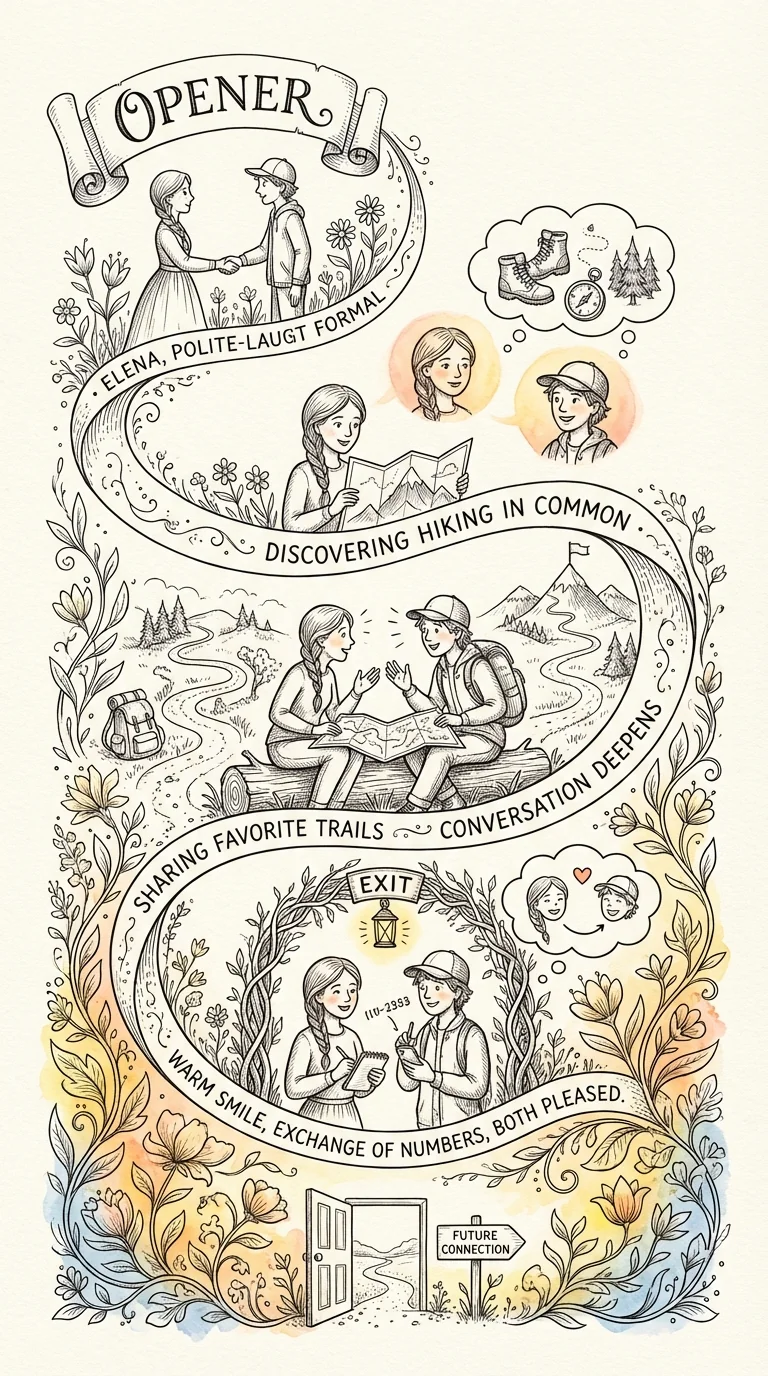
Elena used to panic during conversation lulls. But she discovered the FORD method and open-ended questions. Her recent conversation unfolded naturally: 'How do you know the host?' she started. They discovered mutual love of hiking. She asked about favorite trails. He mentioned an upcoming trip. She shared her favorite trail too. When a natural lull came, she exited warmly: 'I'm going to grab a drink, but here's my number—let's plan a hike!' Easy. Confident. Real connection formed.
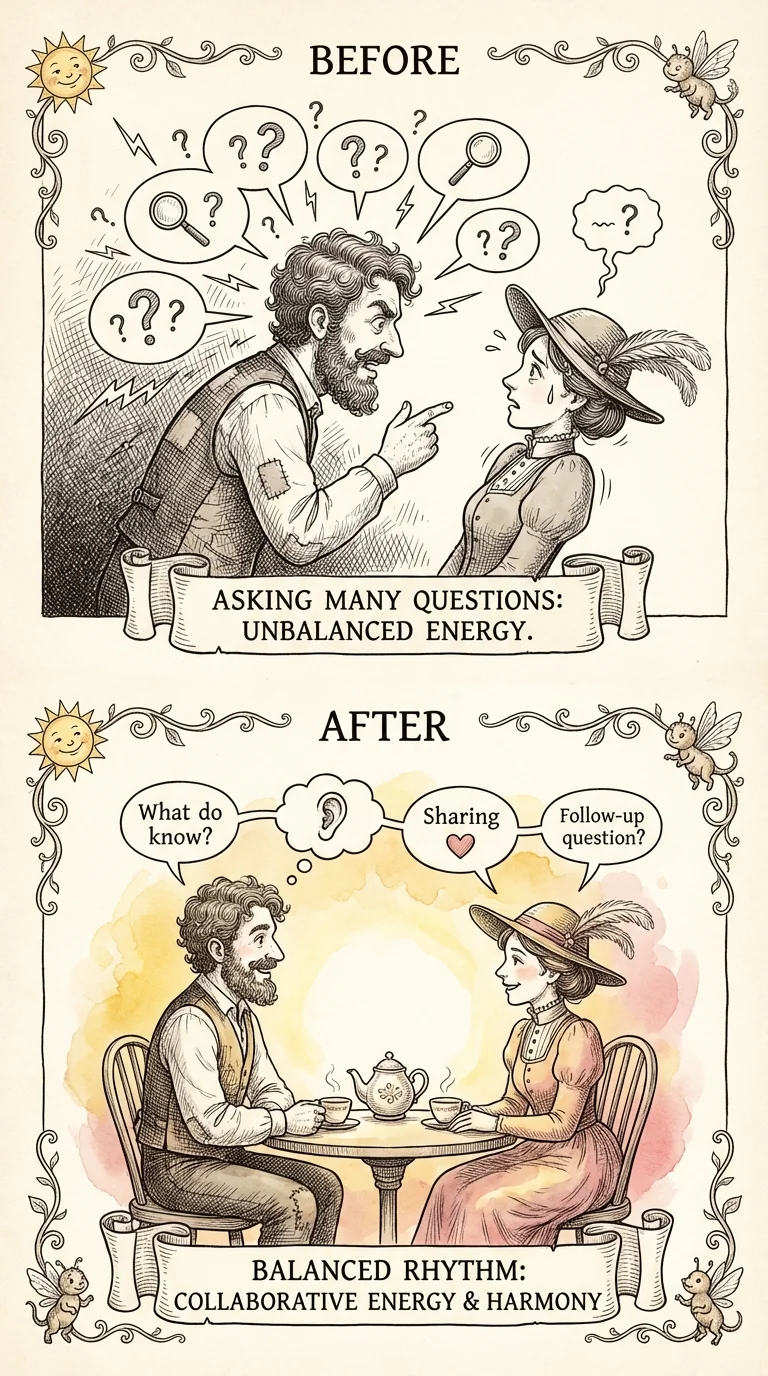
David realized he was asking too many questions—it felt like an interrogation. So he shifted: Ask question, listen, share something brief about himself (participation, not monologue), follow-up question. The rhythm changed everything. Conversations became collaborative instead of one-sided. People engaged more because he was in it with them, not just interviewing. The balance made all the difference.
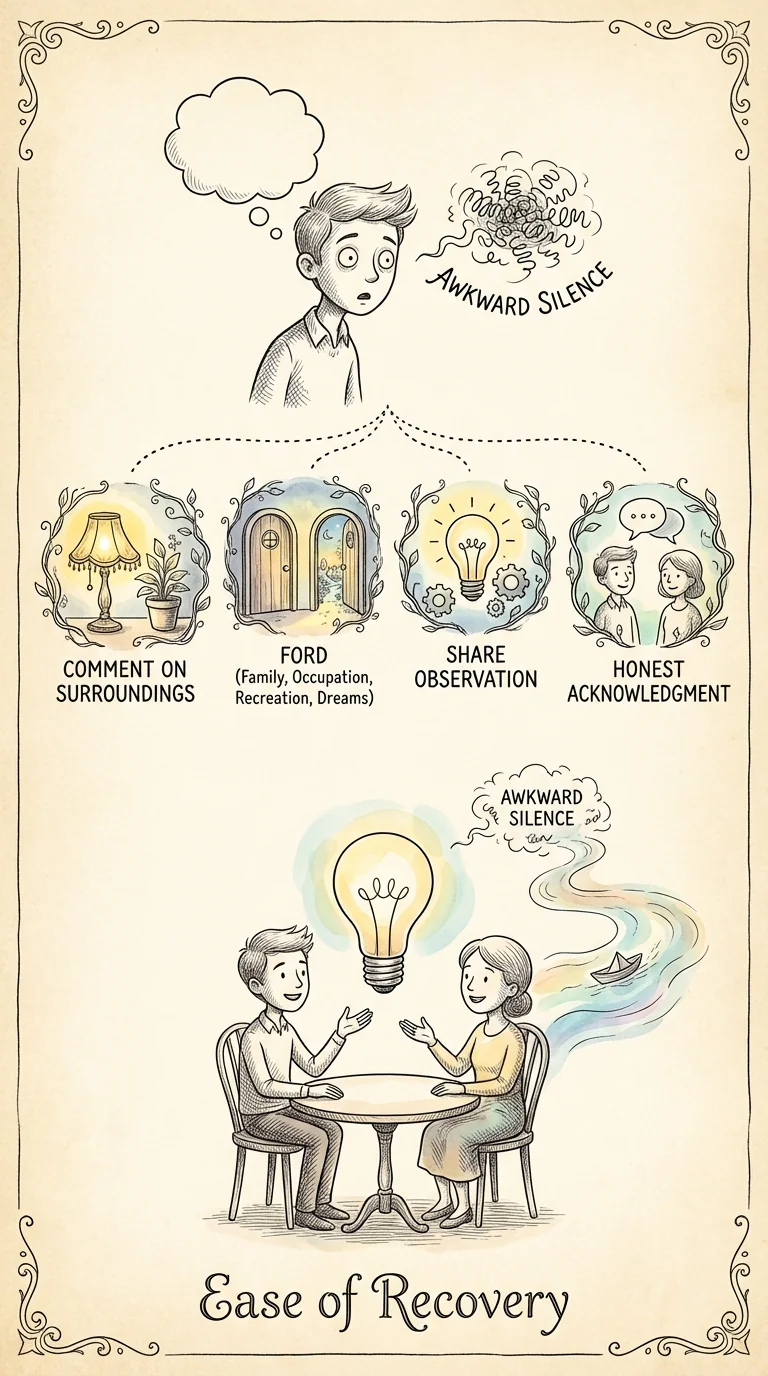
Common issues people face: Awkward silences feel eternal, but they're actually normal and brief. If silence extends, you have options: Comment on the environment, return to FORD, share an observation, or honestly say, 'My mind just went blank—what were we talking about?' That last one often breaks tension with honesty and humor. No pretense needed.
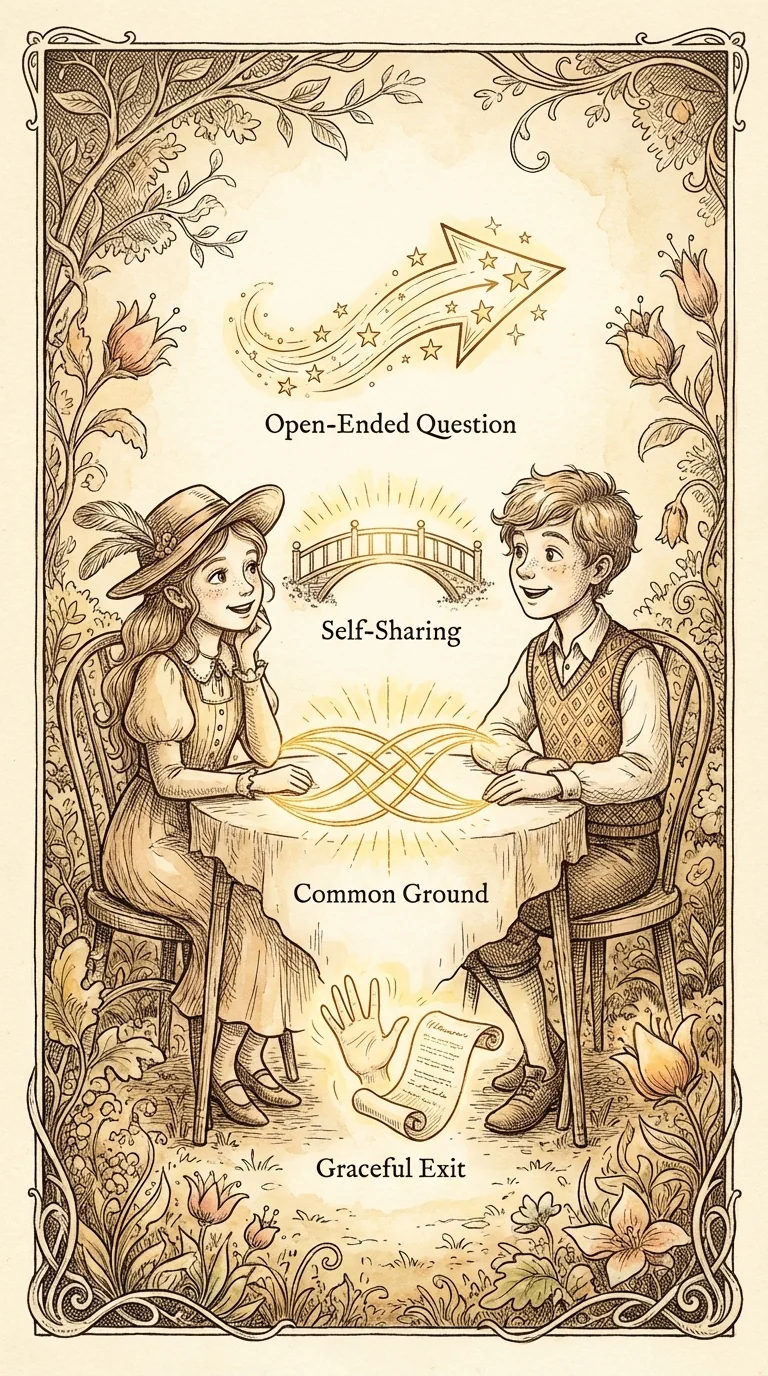
Your practice today: Have ONE conversation where you use at least two open-ended questions (what/how/why instead of yes/no). Share something brief about yourself—show participation. Listen for and name common ground you discover. Then practice a graceful exit. Journal after: How did the conversation flow? What worked well? What would you do differently?
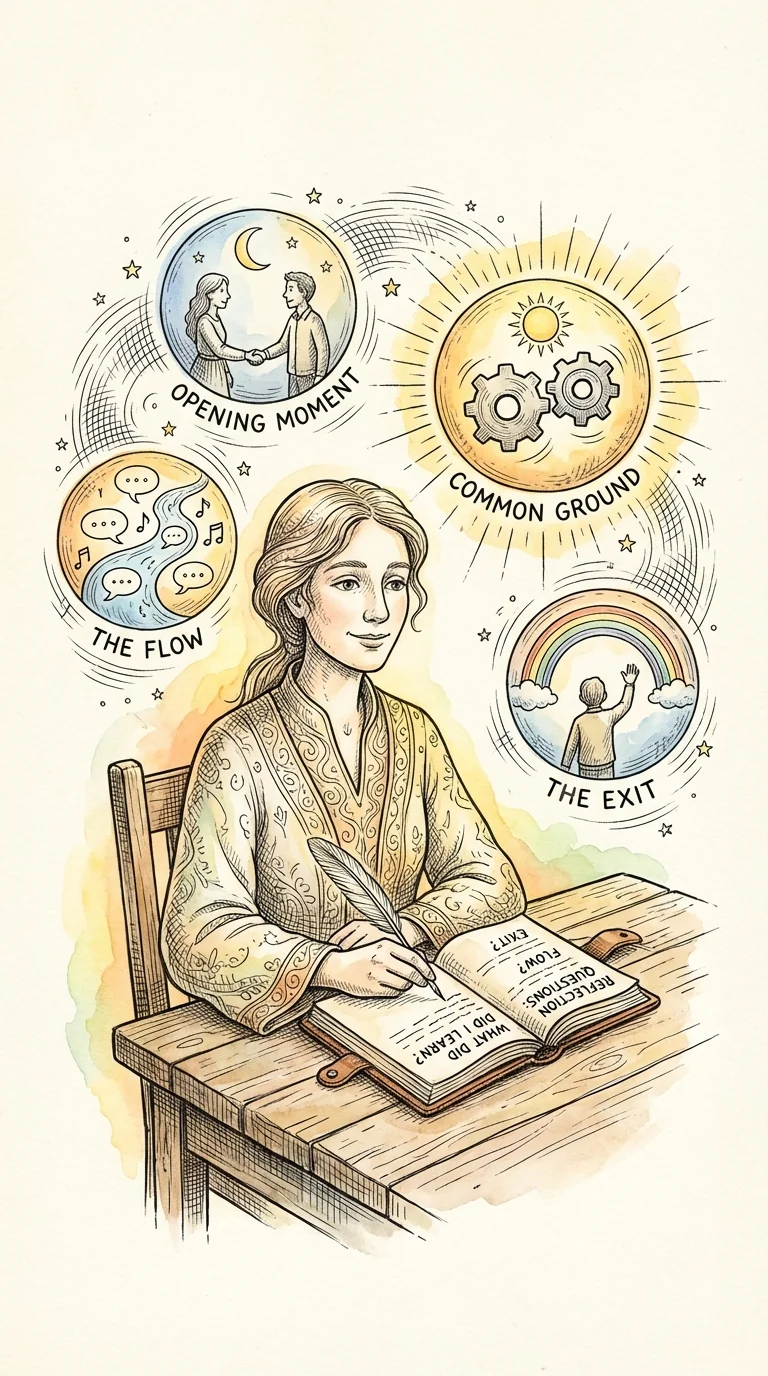
After the conversation, reflect deeply: Did the rhythm feel natural or forced? Where did common ground appear? How did that moment feel different from regular small talk? Did your graceful exit feel warm and honest? These reflections sharpen your awareness. Each conversation is practice. Each one gets easier and more authentic.
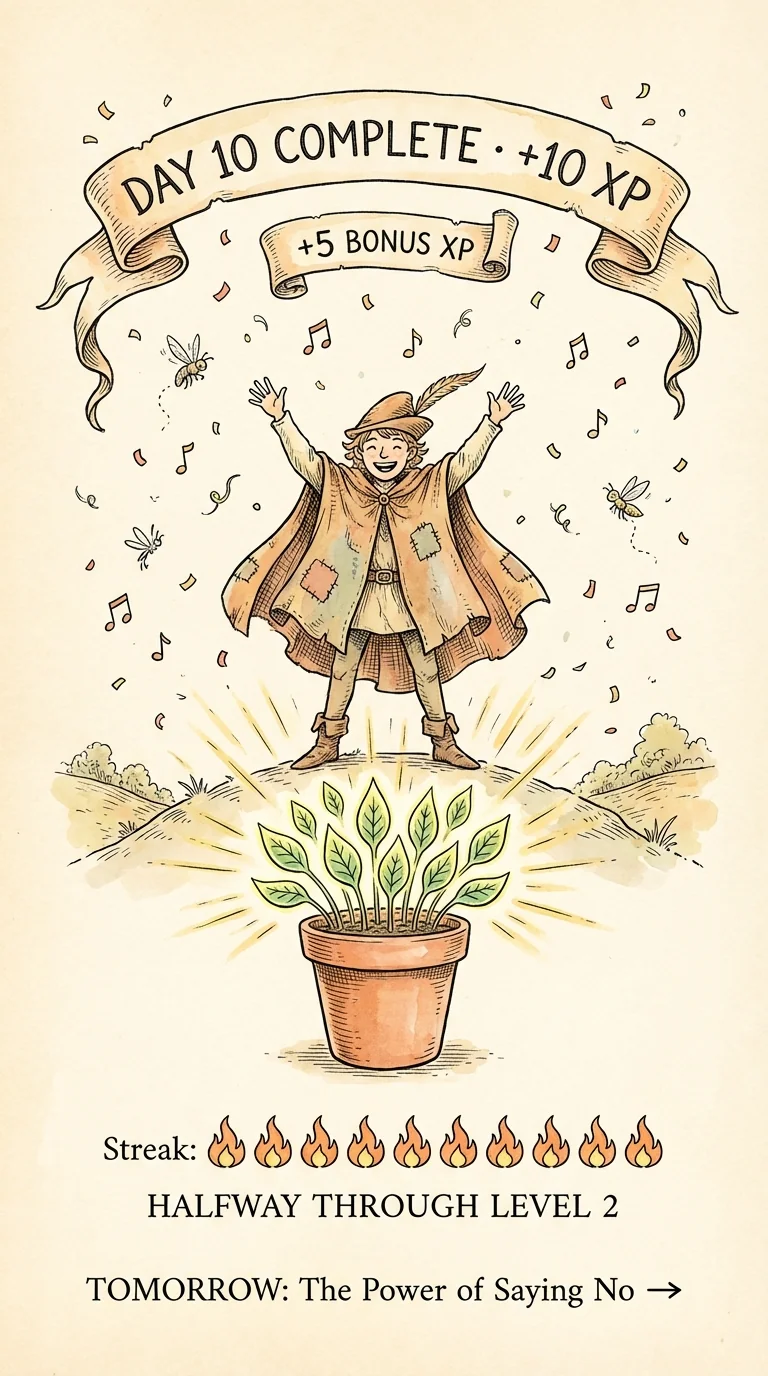
Day 10 complete. You're at the halfway point of Level 2—Growth. Ten leaves on your terracotta plant. Ten days of showing up. Ten conversations practiced. Your banner reads: 'DAY 10 COMPLETE · +10 XP.' You've mastered opening conversations and keeping them flowing. Tomorrow: Something different. Something harder. The Power of Saying No—where confidence meets boundaries.